The main benefits of coloring for adults are short-term: small studies show that 10 to 20 minutes of coloring can lower anxiety, and a week of daily coloring has been linked to fewer low-mood symptoms. It’s cheap, quiet, screen-free and easy to start. It is not a treatment for anxiety or depression, and the research so far is small and mostly done with students.
Here’s what the studies actually tested, how long to color to feel calmer, how to make it more mindful, and why it suits older adults especially well.
Benefits of coloring for adults: what the studies found
| Study | Who took part | What they did | What changed |
|---|---|---|---|
| Flett and colleagues, 2017 | 104 female university students | Colored daily for one week, compared with doing logic puzzles | Lower depressive symptoms and anxiety in the coloring group; no such change in the puzzle group |
| Mantzios and Giannou, 2018 (two experiments) | 160 university students in total | 10 minutes of mandala coloring, with and without mindfulness guidance | Anxiety fell; guided coloring reduced it more. Mindfulness scores didn’t change |
| Probasco, 2017 (student evidence review of 3 trials) | Adults over 17 | About 20 minutes of coloring structured designs vs free coloring | Two of three trials found structured designs lowered anxiety more |
Read the table with care. These are small, short studies, mostly with young adults. They tell us coloring can help people feel calmer in the moment. They don’t tell us how big or lasting the effect is for everyone.
Is coloring good for adults’ mental health?
It looks helpful as a gentle self-care habit. In the University of Otago study published in the Creativity Research Journal, students who colored every day for a week reported lower depressive symptoms and anxiety afterwards. The control group, who did logic puzzles instead, didn’t see the same change. The authors called daily coloring a possible low-cost self-help tool for people without a clinical diagnosis, and described their findings as preliminary.
That last phrase matters. If low mood or worry is affecting your sleep, work or relationships, coloring is a nice extra, not a substitute for talking to a doctor or therapist.
Does coloring reduce stress and anxiety?
For short-term stress, the evidence is fairly consistent. In both of Mantzios and Giannou’s experiments, anxiety scores fell after a 10-minute coloring session. In the second experiment, the group who colored with simple mindfulness guidance saw a bigger drop than those who colored on their own.
The design of the page seems to play a part too. A Philadelphia College of Osteopathic Medicine student review of three trials found that in two of them, about 20 minutes of coloring a structured, detailed design lowered anxiety more than free coloring on a blank page. The review was small, and the author called for larger studies, but it fits what many colorers say: the pattern gives your mind a track to follow.


Is coloring a form of mindfulness?
Not automatically. This was the surprise in the Frontiers in Psychology study on mindful colouring: coloring on its own didn’t raise people’s mindfulness scores, even though it lowered anxiety. The authors titled their paper “When did coloring books become mindful?” for a reason.
Mindfulness means paying attention to the present moment on purpose, without judging it. You can color mindfully, or you can color while half-watching TV and replaying an argument. The crayon doesn’t decide; your attention does.
A 5-step mindful coloring routine
- Set a timer for 15 minutes and put your phone in another room.
- Take three slow breaths before you pick a color.
- Notice the details: the sound of the pencil, the pressure on the paper, how the color builds up with each layer.
- When your mind wanders, name it (“planning,” “worrying”) and come back to the next small shape.
- Stop when the timer goes, even mid-page. Look at what you did for a few seconds before putting it away.
Some people enjoyed the guided approach in the Frontiers study and some found it distracting. If instructions bother you, skip them and simply color slowly.
How long should you color to feel relaxed?
The studies above used sessions of about 10 to 20 minutes, and that’s a sensible place to start. Our practical guide:
| Time | Good for |
|---|---|
| 5 to 10 minutes | A reset between tasks or after a stressful call |
| 15 to 20 minutes | An evening wind-down, about one small section of a detailed page |
| 30 to 60 minutes | A weekend hobby session; take a break to rest your hand and eyes |
Daily short sessions are closer to what the Otago study tested than one long session a week. A simple goal: 15 minutes, most days, for two weeks. Then notice whether you feel any different.
Benefits of coloring for older adults
Coloring suits later life well. It needs no special skill, can be done sitting down, and fits around good and bad days. Practical benefits include:
- Hand and finger practice. Gripping a pencil and staying inside lines works fine motor control.
- Focus. Choosing colors and finishing sections asks for steady attention.
- A sense of achievement. A finished page is something to show, keep or give away.
- Connection. Coloring side by side with a grandchild or friend makes conversation easy.
- Calm. Repetitive, low-pressure tasks can help an anxious afternoon pass more gently.
There’s also some longer-term research on hobbies in general. A Monash University study of 10,318 Australians aged 70 and over found that crafts, reading and similar pastimes were linked to a 7% lower dementia risk over about ten years. It doesn’t single out coloring, and it shows a link rather than proof, but it supports keeping creative hobbies in your week.
Tips for seniors
- Choose pages with larger spaces and bold outlines if eyesight or hand tremor is an issue.
- Try thicker pencils, triangular grips or felt-tip markers, which need less pressure.
- Color at a table with good light, not on your lap.
- Print on thicker paper so markers don’t bleed through.
What should you color with?
The tool changes how coloring feels, so pick one that matches your mood.
| Tool | Feels like | Best for |
|---|---|---|
| Colored pencils | Slow and controlled; colors layer and blend | Detailed pages and longer, calmer sessions |
| Felt-tip markers | Quick, bold color with little pressure | Larger spaces, tired hands, fast results |
| Gel pens | Smooth lines with shine or sparkle | Small details and outlines |
| Crayons | Soft and forgiving | Coloring alongside young children |
If you’re coloring to wind down, we’d start with pencils. They slow you down a little, and that slower pace is part of the point. Keep a small set of 12 to 24 colors so choosing doesn’t become another decision to stress over.
Common myths about adult coloring
- Myth: Coloring is just for kids. Fact: The studies above were all done with adults.
- Myth: Any coloring counts as mindfulness. Fact: Research found anxiety dropped, but mindfulness only follows if you pay attention on purpose.
- Myth: Coloring can treat anxiety disorders. Fact: Studies tested short-term mood in mostly healthy students. It’s a self-care habit, not therapy.
- Myth: You need to be artistic. Fact: The outline does the drawing. You only choose colors.
Choosing adult coloring pages that help you relax
Based on the research and our own experience making them, look for:
- Structure. Repeating patterns, botanicals and geometric designs give your mind a clear path.
- The right level of detail. Too simple can feel boring; too tiny can feel like work. Medium detail suits most people.
- Calm subjects. Leaves, flowers and natural shapes are popular for winding down.
- Printable PDFs. You can reprint a favorite page, test color combinations, and print at a larger size.
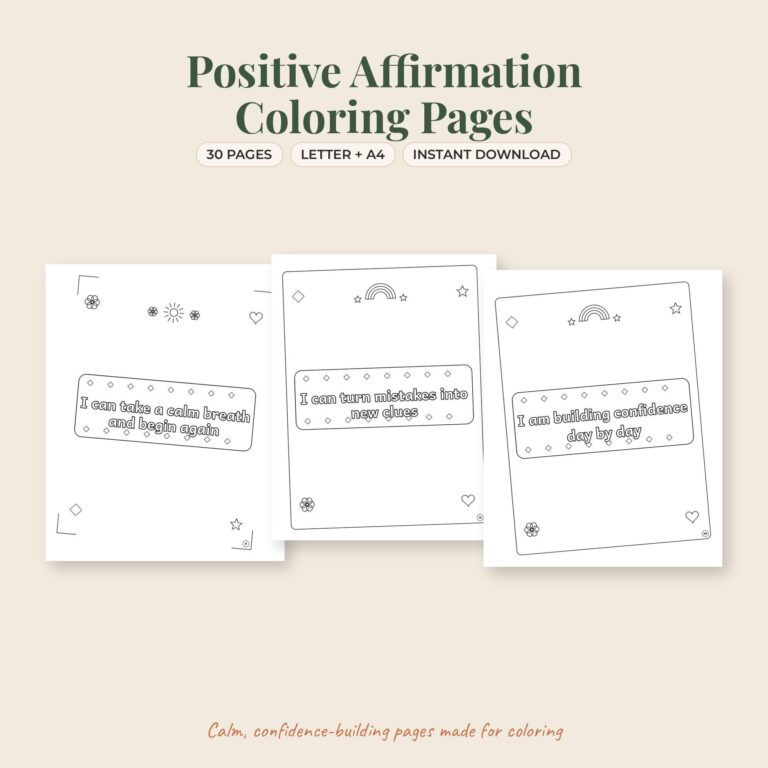
Coloring is also a good shared activity across ages. While you work on a botanical page, a child can color a simpler sheet next to you. Our affirmation coloring pages for kids and winter coloring pages for kids work well for that.
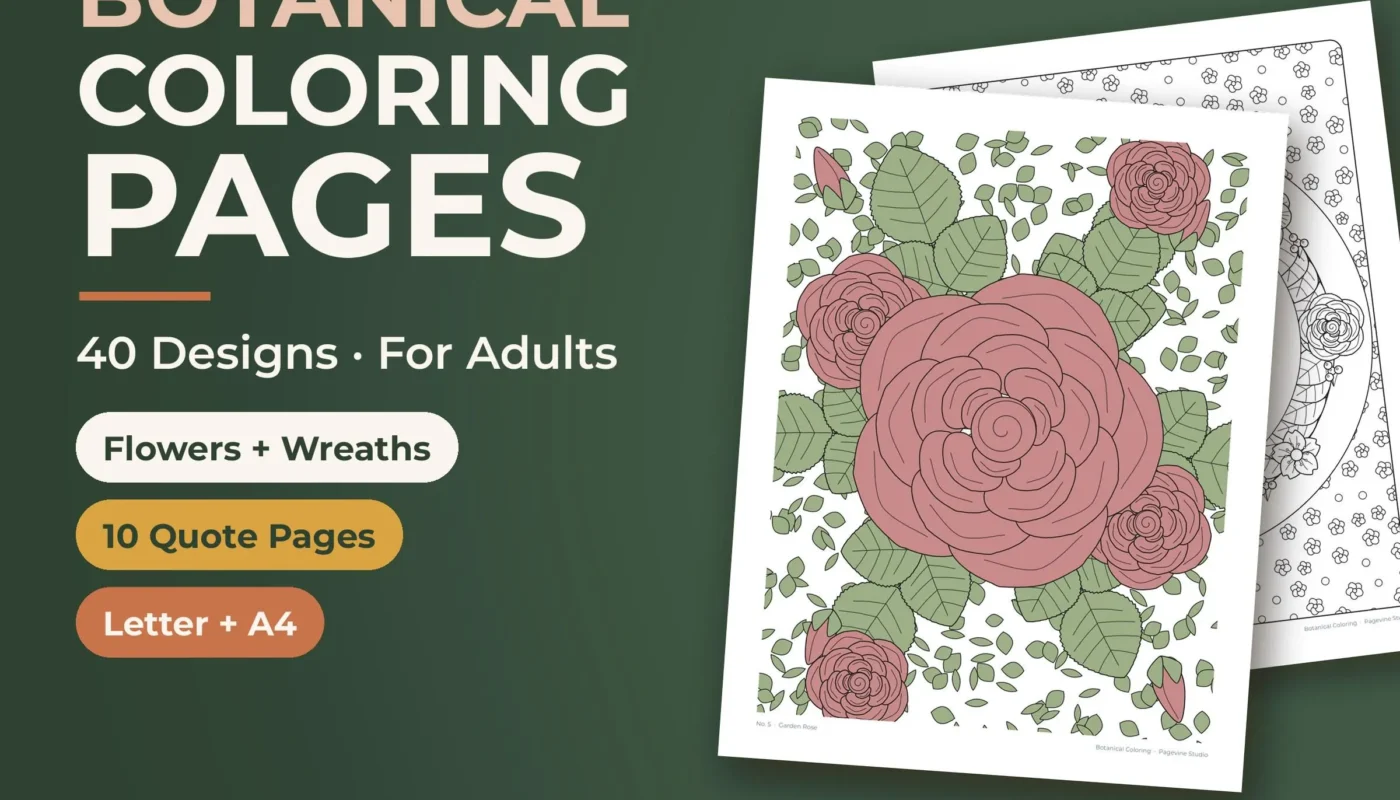
In the UK and Canada, you’ll often see this called mindful colouring, and the same tips apply. If you’d like a ready-made set, our botanical coloring pages for adults focus on leaves and flowers, and you can browse more styles on our printable coloring pages hub or in the large print puzzles and activities collection.
This article is general information, not medical advice.