The best gratitude activities for kids are short, regular and concrete. Think one leaf on a thankful tree each evening, a two-minute “good things” chat at dinner, or a handmade thank-you card for the bus driver. Five minutes a day does more than one big talk about being thankful.
Below you’ll find activities sorted by age, a step-by-step thankful tree, and what researchers have found about gratitude journals and how children learn to be grateful.
Gratitude activities for kids, by age
A 4-year-old and a 10-year-old need very different versions of the same idea. Use this table to pick a starting point.
| Age | What they can do | Try this |
|---|---|---|
| 3 to 5 | Name things they like; copy what adults do | Thankful tree leaves (you write, they decorate), picture gratitude jar, “thank you” drawings |
| 6 to 8 | Start telling polite thanks from real thanks; write short sentences | Thankful tree they write themselves, “three good things” at dinner, thank-you notes |
| 9 to 12 | Understand effort and kindness behind a gift or favor | Gratitude journal, thank-you visit or letter, “who helped today?” reflection |
| 13 and up | Think about meaning, community and their own strengths | Longer journal prompts, volunteering, writing to a mentor or teacher |
These ranges are rough. Go by your child, not the number.
What is a thankful tree activity?
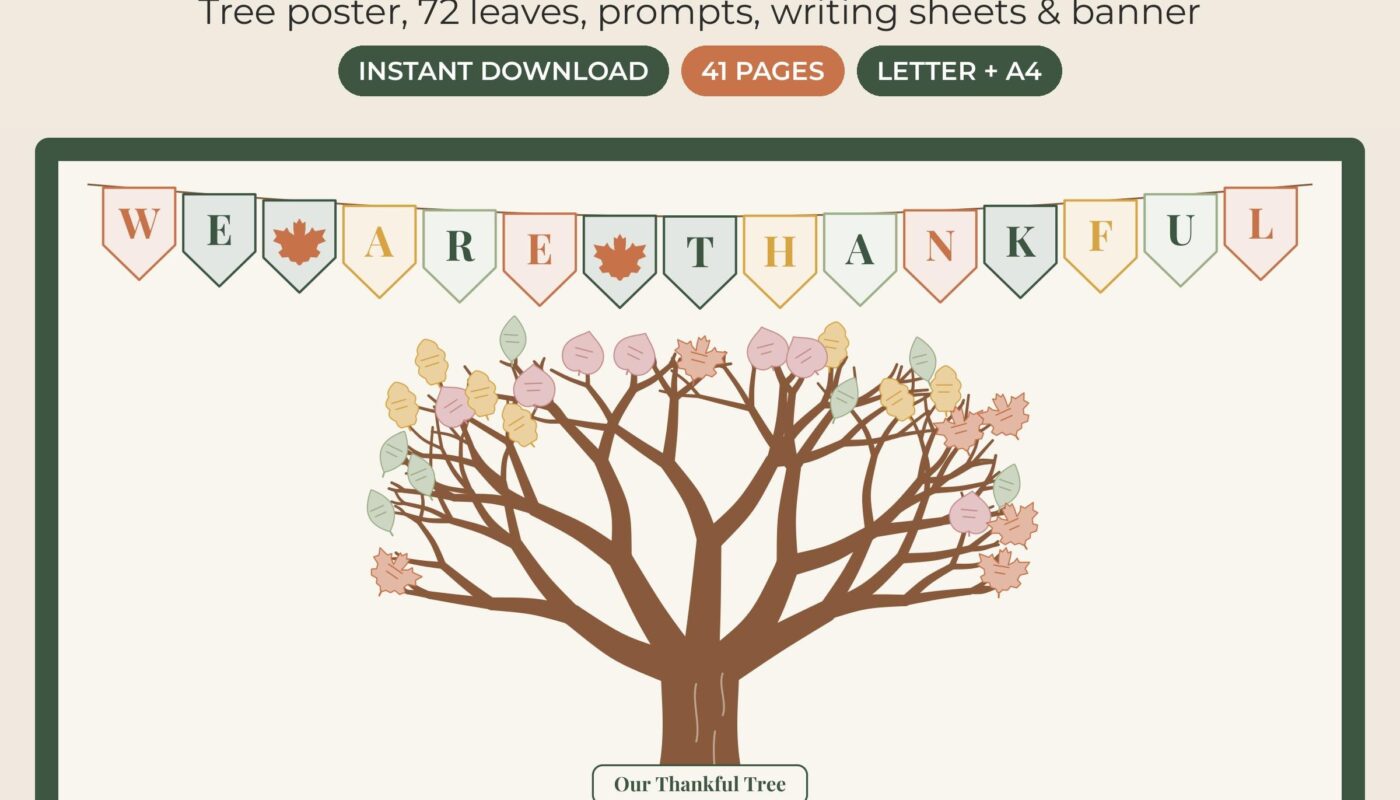
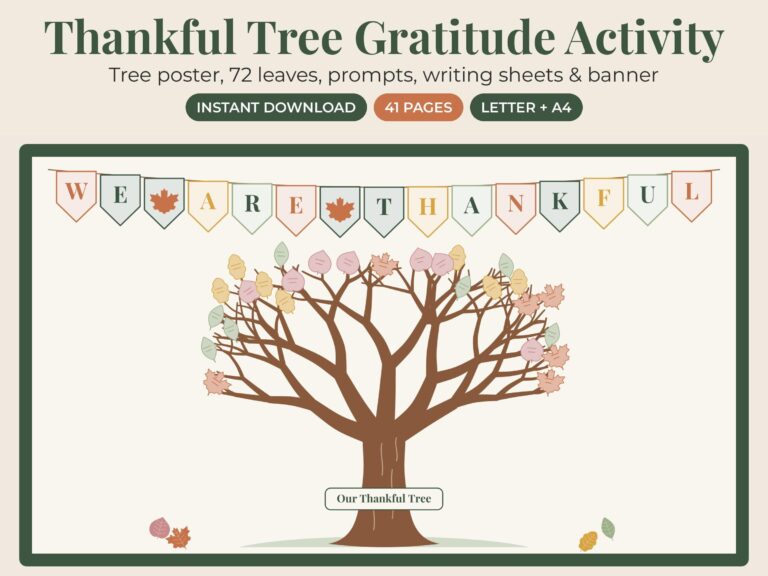
A thankful tree is a simple display: a trunk and branches on a wall, door or poster, plus a pile of paper leaves. Each day, everyone adds a leaf with one thing they’re thankful for. By the end of a few weeks the tree is full, and you have a record of small good things you’d otherwise forget.
It’s popular in the weeks before Thanksgiving, but it works in any month. Many classrooms use it in autumn and then switch to snowflakes or flowers later in the year.
How to make a thankful tree, step by step
- Make the trunk. Cut a trunk and a few branches from brown paper, or use a real branch in a jar.
- Prepare the leaves. Print or cut 30 to 40 leaves in a few colors. Keep them in an envelope next to the tree with a pen and some tape.
- Pick a time. Tie it to something that already happens, like dinner or bedtime. A habit sticks better when it has a fixed cue.
- Add one leaf each. Younger kids can say their answer while you write it. Older kids write their own.
- Go specific. “My family” is fine on day one. By day five, nudge toward details: “Grandad fixed my bike seat.”
- Read it back. Once a week, read a few old leaves aloud. Kids love hearing their own words.
- Save it. Before you take it down, photograph the tree or keep the leaves in a labeled envelope for next year.
12 more gratitude activities that don’t feel like homework
Five-minute daily activities
- Three good things. At dinner, each person shares three good things from the day. One can be tiny.
- Who helped today? Ask, “Who made your day a bit easier?” and talk about what they did.
- Gratitude jar. Drop in a note or a drawing each day. Open it on a set day, like the last Friday of the month.
- “My day is better because…” A sentence starter for the car or the walk home from school.
Weekly activities
- Thank-you notes. One short card a week to someone outside the family: a coach, a librarian, a neighbor.
- Gratitude walk. On a walk, take turns pointing out things you’re glad exist: a bench, a tree, a crossing guard.
- Kindness swap. Each family member secretly does one helpful thing for another during the week, then you guess who did what.
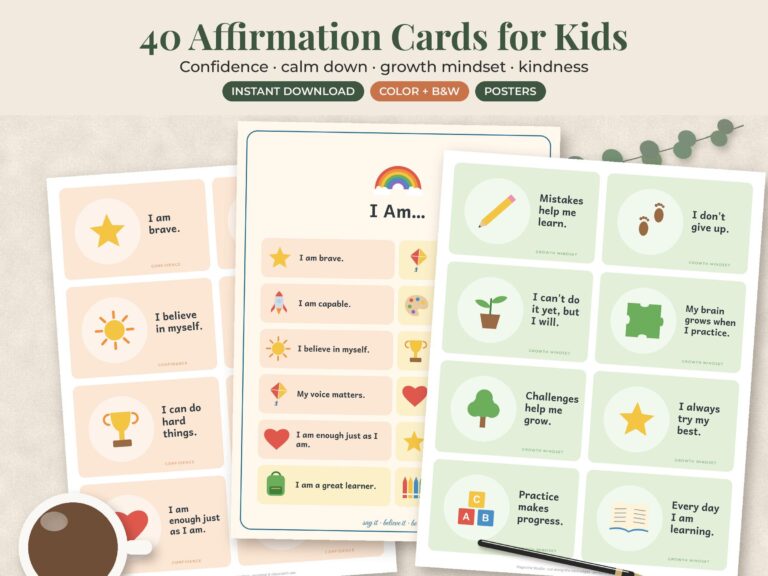
- Affirmation and thanks cards. Kids pick a card each morning and add one thing they’re thankful for.
Bigger family projects
- Thank-you visit. Your child writes a letter to someone who helped them and reads it to that person. More on why this works below.
- Helping at home. Shared chores show kids how much work goes into a household. A simple chore chart helps.
- Give and declutter. Sort outgrown toys and clothes to donate, and talk about who might use them.
- Gratitude coloring page. For little ones, color a page together and write one thankful word on it. Our printable coloring pages work well for this.
Does gratitude journaling help kids?
There is decent evidence that it can. Researchers writing for Berkeley’s Greater Good Science Center describe a study where middle school students listed five things they were grateful for each day for two weeks. Compared with students who wrote about hassles or everyday events, they reported more optimism, more life satisfaction and fewer physical complaints. They were also more satisfied with school, and that held three weeks later.
The same article describes a study of teens: those who were more grateful at the start of high school reported less depression and more happiness and life satisfaction four years later. That is a link, not proof that gratitude caused the change, but it is encouraging.
How to make a kids’ gratitude journal work
- Keep it short. Three lines is plenty. Five items is the upper limit for most kids.
- Use prompts. “Something that made me laugh,” “someone who was kind,” “something I can do now that I couldn’t do last year.”
- Skip the grading. Never correct spelling in a gratitude journal. It’s not a writing exercise.
- Let them draw. Under-7s can draw instead of write.
- Do it together. If you keep your own journal at the same time, it feels like a family thing, not a chore. A guided 90-day gratitude journal works well for parents and older kids.
At what age do children understand gratitude?
Gratitude grows in layers. Toddlers learn to say “thank you” as a polite habit. The deeper part, understanding that someone chose to help you, comes later.
Andrea Hussong, a psychologist at the University of North Carolina, studied families with children aged 6 to 9. She told the university that kids as young as 6 recognize the difference between simply saying “thank you” and genuine gratitude, but that at that age they still lack the perspective and experience to fully feel it.
So for preschoolers, focus on the habit and the words. From around 6, start talking about the why: what someone did and why it mattered.
How to teach kids gratitude without lecturing
Gratitude, as the Greater Good Science Center puts it, is “a relationship-strengthening emotion”, because it asks us to see how other people have supported us. That gives you a practical way in: help kids notice the people behind the good things.
The Greater Good researchers built a school curriculum around three simple ideas. You can use them in everyday talk.
| Idea | What it means | What you can say |
|---|---|---|
| Notice the intention | Someone chose to help on purpose | “Why do you think Aunt Sara made your favorite soup?” |
| Notice the cost | Helping took time or effort | “Your coach stayed late after practice. What do you think he gave up?” |
| Notice the benefit | The help made a real difference | “How was your day better because your friend shared her pencils?” |
In that study, a daily version of the lessons led children to write 80 percent more thank-you cards to their school’s parent-teacher association. Teachers also found the children happier.
Three more things that help
- Model it out loud. Thank your partner, the cashier and your kids where they can hear you. Hussong’s team expects parent modeling to be a main driver of gratitude.
- Talk little and often. Her early findings linked daily conversations about gratitude with more grateful children. Short chats beat big sit-down talks.
- Pick gratitude-friendly activities. Volunteering, helping a neighbor, or making cards for a senior center all give kids real people to feel thankful toward.
Mistakes we’d avoid
- Forcing a “thank you” on the spot every time. Prompt gently, then talk about it later in private.
- Guilt as a teaching tool. “Other kids have nothing, so be grateful” tends to cause shame, not thankfulness.
- Making it a performance. A thankful tree is not a competition for the longest leaf.
- Doing it only once a year. A Thanksgiving activity is a great start. Keep one small habit going afterwards, like three good things at dinner.
A simple four-week gratitude plan
Want a plan you can stick on the fridge? Here is one that fits the weeks before Thanksgiving, or any month you choose.
- Week 1: Set up the thankful tree. One leaf each per day.
- Week 2: Add “who helped today?” at dinner. Write one thank-you note.
- Week 3: Start a short gratitude journal for kids 8 and up. Little ones keep going with the tree.
- Week 4: Plan a thank-you visit or letter. Read the tree leaves aloud at a family meal.
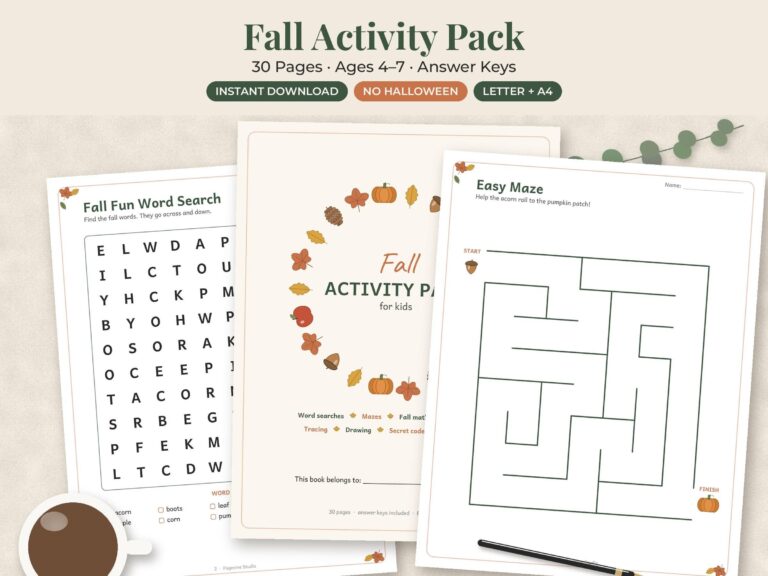
If you want a ready-made version, our thankful tree gratitude activity includes the tree and leaves to print, and the fall Thanksgiving activity pack for kids adds puzzles and coloring for the same weeks.