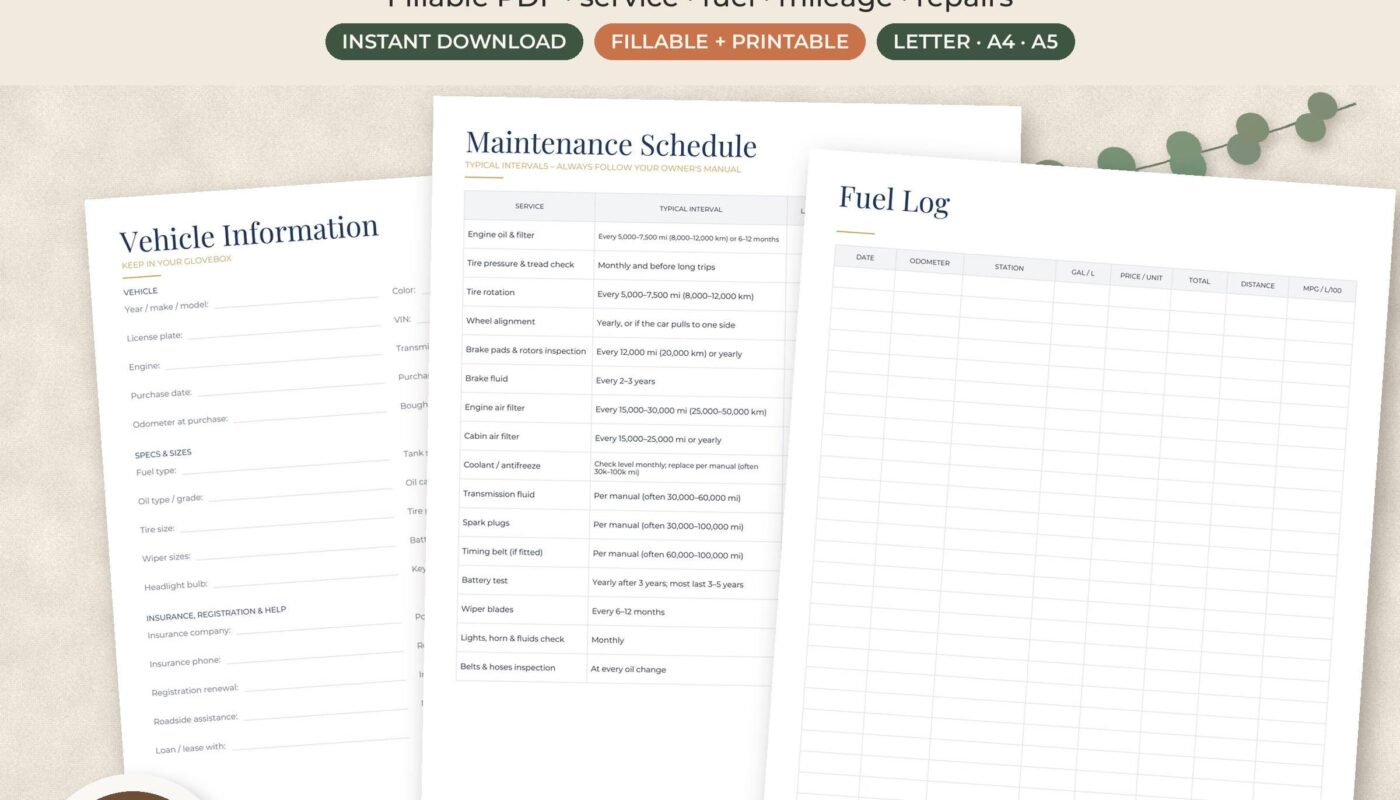
A good winter car maintenance checklist covers seven things: battery, tires, coolant, wipers and washer fluid, lights, an emergency kit, and a safety recall check. Do them before the first hard freeze, write down what you did, and you will avoid most of the dead-battery mornings and roadside waits that winter brings.
Below is the full checklist, a four-week countdown to get it done without a lost Saturday, the facts on winter tires and cold-weather tire pressure, and a simple service log you can copy.
The winter car maintenance checklist at a glance
Print this table or copy it into your notes. Most items take a few minutes. The ones marked “shop” are worth having a mechanic do during an oil change.
| Item | What to check | Who does it |
|---|---|---|
| Battery and charging system | Battery test, terminals free of corrosion, belts not cracked | Shop (often free with service) |
| Tire pressure | Set to the number on the driver’s door sticker, checked cold | You |
| Tire tread and condition | Tread depth, cuts, bulges, and the spare | You |
| Coolant (antifreeze) | Level is full, type matches the owner’s manual, no leaks | You check, shop tests |
| Wipers and washer fluid | Blades wipe clean, reservoir full of winter fluid with de-icer | You |
| Defroster and heater | Front and rear defrost clear the glass | You |
| Lights | Headlights, brake lights, turn signals, hazards | You (with a helper) |
| Floor mats | Rubber mats fitted and clipped so they cannot slide under the pedals | You |
| Safety recalls | Run your VIN through the recall lookup | You, 2 minutes online |
| Emergency kit | Packed and in the trunk (list below) | You |
Every item on that list comes from the NHTSA winter driving tips, which also suggest keeping your gas tank close to full whenever you can. A fuller tank gives you more time to stay warm if you get stuck, and for an electric car, the same idea applies to keeping a higher charge.
How to prepare your car for winter: a 4-week countdown
Trying to do everything on the first cold weekend is how things get skipped. Spread it out. If your area usually sees its first freeze in mid-November, start in mid-October.
Week 1: Book the shop visit
- Schedule an oil change and ask for a battery and charging system test while the car is in.
- Ask them to look at belts, hoses, and coolant strength.
- If you use winter tires, book the swap now. Shops get busy fast once the first snow is in the forecast.
Week 2: The driveway check
- Check tire pressure and tread on all four tires and the spare.
- Walk around the car with a helper and test every light.
- Top up washer fluid with a winter blend. Summer fluid can freeze in the lines.
- Run the wipers. If they streak or chatter, replace them.
Week 3: Build the emergency kit
- Pack the kit from the list further down.
- Put rubber floor mats in, and use the retention clips.
- Look up your VIN for open recalls.
Week 4: Log it and set reminders
- Write the date, mileage, and what was done in your service log.
- Set a monthly phone reminder for tire pressure through March.
- Note when the winter tires need to come off in spring.
If you like seeing the whole year at once, mark the swap dates and service reminders on a 2027 year planner printable so spring maintenance is already on the calendar.
When should you change to winter tires?
The common rule is to put winter tires on once daytime temperatures stay around 7°C (about 45°F). Transport Canada’s guide to using winter tires explains why: below 7°C, all-season and summer tires begin to lose elasticity, and that means less grip. You do not need snow on the ground for winter tires to help. Cold, dry pavement is enough.
A few rules worth knowing:
- Install them in sets of four. Transport Canada says winter tires should go on in sets of 4, and handling is best when all four match in type and size. Two winter tires on one axle can make the car harder to control.
- Look for the mountain and snowflake symbol. Tires marked with it meet specific snow traction requirements. The “M+S” mark alone is not the same thing.
- Quebec has a legal deadline. The SAAQ winter preparation page says winter tires are required on most Quebec-registered vehicles from December 1 to March 15 inclusive. Other provinces and some US states have their own rules for certain roads, so check locally.
- Check the age, not just the tread. The last four digits of the DOT code on the sidewall show the week and year the tire was made. “3621” means week 36 of 2021. Older rubber hardens and grips snow and ice less well.
How much tread is enough?
NHTSA says tread should be at least 2/32 of an inch on all tires. That is the legal floor in many places, not a winter target. Transport Canada advises against using tires worn close to 4 mm (5/32 of an inch) on snow-covered roads. Our take: if you drive in real snow, treat 5/32 as your replace-soon line.
How often should you check tire pressure in cold weather?
At least once a month, and before any long trip. NHTSA’s tire safety guidance says to check all tires, including the spare, when they are cold, which means the car has not been driven for at least three hours. First thing in the morning is easiest.
Air pressure drops when the temperature drops. That is why your tire pressure warning light often comes on during the first cold snap of the year, then goes off after a few miles of driving. Do not ignore it. Top up the tires instead.
Two common mistakes:
- Using the number on the tire. The sidewall shows the maximum pressure, not the right one for your car. Use the sticker on the driver’s door jamb or the owner’s manual.
- Checking in a warm garage. A tire that reads fine in a heated garage will be under-inflated once it sits outside below freezing. Check it in the conditions you drive in.
Correct pressure saves money too. FuelEconomy.gov says you lose about 0.2% of your gas mileage for every 1 psi drop in average tire pressure. Five psi low on all four tires is roughly a 1% hit, every tank, all winter.
What should be in a winter car emergency kit?
Keep it in a plastic bin or a duffel bag in the trunk so it stays together. This list follows NHTSA’s suggestions, with a few practical extras.
- Snow shovel, snow brush or broom, and ice scraper
- Sand or cat litter for traction if you get stuck
- Jumper cables (or a charged jump starter pack)
- Flashlight with spare batteries
- Flares or reflective warning triangles
- First aid kit
- Blankets, plus a spare hat and gloves
- Phone charging cable and a power bank
- Bottled water and non-perishable snacks
- Any medicine someone in your family needs daily
Check the kit twice a winter. Snacks get eaten, power banks lose charge, and water bottles can split if they freeze solid. Leave a little room in each bottle.
If you do get stuck
Stay with the car. Clear snow from around the exhaust pipe, and run the engine only in short bursts, just long enough to warm up. NHTSA warns that a blocked exhaust with the windows up can let carbon monoxide build up inside the car.
Why keep a car maintenance log?
A vehicle maintenance record sounds like busywork until you need it. Here is where it pays off:
- Selling the car. A buyer who sees dated oil changes and tire rotations trusts the car more. That can help you hold your price.
- Warranty claims. If a part fails under warranty, records showing you followed the maintenance schedule make the claim easier.
- Spotting problems early. If you are adding coolant every month, or the same tire keeps losing air, the pattern shows up on paper before it turns into a breakdown.
- Not paying twice. Shops sometimes suggest a service you had done four months ago. A quick look at the log settles it.
What to write down
Keep it simple, or you will stop doing it. One line per visit is enough.
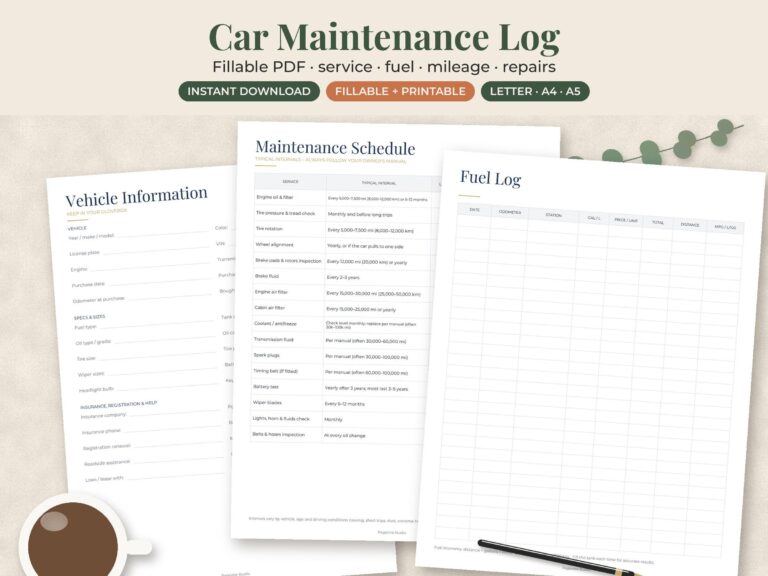
| Date | Mileage | Service | Shop / DIY | Cost | Next due |
|---|---|---|---|---|---|
| Oct 26 | 48,210 | Oil change, battery test (passed) | Main St. Auto | $64 | Per owner’s manual |
| Nov 2 | 48,390 | Winter tires on, pressure set to door sticker | Tire shop | $80 | Off in spring |
| Nov 9 | 48,560 | Wiper blades, winter washer fluid | DIY | $32 | Check in fall |
Those figures are just an example of how to fill it in. Store receipts in the same folder or binder as the log, so the paper trail matches.
Car maintenance schedule by mileage: where to find yours
There is no single schedule that fits every car. Oil change intervals, for example, vary a lot by engine, oil type, and how you drive. Your owner’s manual is the authority, and many cars also show a maintenance reminder on the dashboard.
A useful way to set up your log is to list each service once, then copy in the interval from your manual:
- Engine oil and filter
- Tire rotation
- Engine air filter and cabin air filter
- Brake inspection
- Coolant replacement
- Transmission fluid
- Spark plugs
- Battery test
One more money tip from FuelEconomy.gov: using the oil grade your manufacturer recommends can improve gas mileage by 1% to 2% compared with using the wrong grade. It is worth checking the receipt to see what went in.
Keep it all in one place
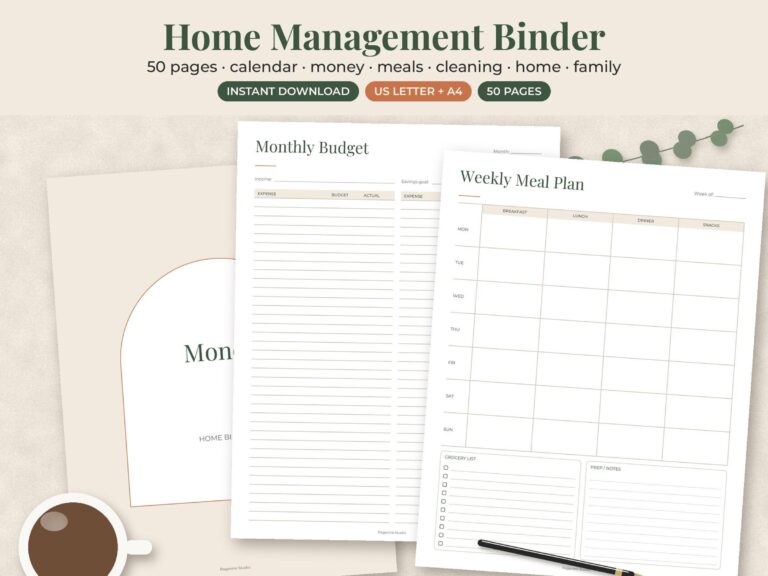
The easiest system is the one you will actually open. For most families that means one folder or binder with the car log, receipts, insurance card copy, and roadside assistance number. If you already run the house from a home management binder, add a car tab to it. You can find more pages for that kind of setup in our home organization printables.
If you want a ready-made version, our printable car maintenance log has the service record pages and reminders already laid out, so you only have to fill in the lines.