
Used in the UK, the 50/30/20 rule splits your monthly take-home pay three ways: 50% for needs, 30% for wants and 20% for savings and paying off debt. It works well as a starting point for UK budgets, as long as you base it on what actually lands in your bank account, not your salary on paper.
The rule comes from the US book All Your Worth by Elizabeth Warren and Amelia Warren Tyagi, so a few UK costs, like council tax and workplace pensions, need a home. This guide sorts them out and runs the numbers on a typical UK salary.
Is the 50/30/20 rule based on gross or take-home pay?
Take-home pay. That’s your salary after Income Tax, National Insurance, your workplace pension and any student loan repayments have come off.
Using gross pay is the most common mistake. On a £30,000 salary, the gap between gross and take-home is roughly £400 a month, so a budget built on gross pay is broken before it starts.
Your payslip shows your take-home figure as “net pay.” If you’re starting a new job or want to check, search GOV.UK for its free “Estimate your Income Tax” tool, which works out tax, National Insurance and take-home pay for the current tax year, 6 April 2026 to 5 April 2027.
Worked example: the 50/30/20 rule on a £30,000 salary
Let’s take someone in England earning £30,000 a year, paid monthly, on the standard tax code, before pension and student loan.
Step 1: work out take-home pay
- Gross monthly pay: £30,000 ÷ 12 = £2,500
- Income Tax: the first £12,570 a year is tax-free (the Personal Allowance), and income up to £50,270 is taxed at 20%, according to GOV.UK’s Income Tax rates. That’s about £290.50 a month.
- National Insurance: most employees pay 8% on monthly earnings between £1,048 and £4,189, under the 2026 to 2027 National Insurance rates. That’s about £116 a month.
- Take-home: roughly £2,093 a month
A workplace pension and student loan would lower this further, so always use your real payslip figure. Scotland has different Income Tax bands, so the tax line will differ there.
Step 2: split it 50/30/20
| Bucket | Share | Monthly amount |
|---|---|---|
| Needs | 50% | £1,047 |
| Wants | 30% | £628 |
| Savings and debt repayment | 20% | £419 |
Those are the targets. The next question is whether your real costs fit them, and for many UK renters they don’t.
Does the 50/30/20 rule work in the UK?
Honestly, rent is the sticking point. The Office for National Statistics puts the average private rent at £1,400 a month across the UK in August 2026, £1,459 in England and £2,332 in London. Those are provisional figures and they vary a lot by area.
In our example, £1,047 has to cover all needs. If you rent alone at the England average, rent by itself is about 70% of take-home pay. No amount of clever budgeting fixes that maths.
So treat 50/30/20 as a target, not a test you pass or fail. Many people use an adjusted split for now:
| Split | Who it suits | On £2,093 take-home |
|---|---|---|
| 50/30/20 | Homeowners with a modest mortgage, people sharing a home, couples splitting costs | £1,047 / £628 / £419 |
| 60/20/20 | Renters in average-cost areas who still want to save hard | £1,256 / £419 / £419 |
| 70/20/10 | High-rent areas or single-income households | £1,465 / £419 / £209 |
| 50/20/30 | Anyone clearing expensive debt or building an emergency fund fast | £1,047 / £419 / £628 |
Our view: protect the savings slice first, even if it starts at 5% or 10%. It’s easier to grow a habit you already have than to start one later.
What counts as needs and wants in the UK?
A need is something you must pay to live, work and stay out of trouble with lenders. A want is everything you could cut for a month without real harm.
| Needs (50%) | Wants (30%) | Savings and debt (20%) |
|---|---|---|
| Rent or mortgage | Eating out and takeaways | Emergency fund |
| Council tax | Streaming and app subscriptions | Cash ISA or Stocks and Shares ISA |
| Gas, electricity and water | Gym membership | Overpayments on credit cards or loans |
| Food shopping (the basics) | Clothes beyond the basics | Extra pension contributions |
| Travel to work | Trips away and days out | Saving for a house deposit |
| Phone and broadband (basic plan) | Phone upgrades, hobbies, gifts | Sinking funds for car or home repairs |
| Insurance, TV licence, childcare | Coffee out, beauty treatments | |
| Minimum debt repayments |
Grey areas are normal. A broadband package with sports channels is part need, part want. Put the basic cost in needs and the extra in wants.
Where do council tax and pension go in 50/30/20?
Council tax
Council tax is a need. It is usually paid in 10 monthly instalments, so two months a year have no council tax bill. Many councils will spread it over 12 months if you ask, which makes a steady monthly budget easier.
Workplace pension
If your pension comes out of your pay before it reaches you, it’s already outside your take-home figure, so leave it out of the split. That money is being saved for you, which is a quiet bonus on top of your 20%.
If you pay extra into a pension or a private pension yourself, count it in the 20% savings bucket.
Student loan
Plan 2 and similar repayments come out through payroll, so they’re already gone from take-home pay. Don’t count them twice.
Needs over 50%? Five ways to close the gap
If your needs are well above half your pay, these are the changes that usually move the numbers most. Start with the ones that take one phone call.
- Check your energy and broadband deals. If your fixed deal or contract has ended, you may be on a pricier rate. A quick comparison often saves more than months of skipped coffees.
- Check your council tax band and discounts. If you live alone, you may be entitled to a 25% single person discount. Ask your council.
- Trim the food shop with a plan. A weekly meal plan and a list cut both waste and top-up shops. Our meal planner template guide shows a simple layout.
- Review insurance at renewal. Don’t let car or home insurance roll over without getting at least two other quotes.
- Look at housing over the longer term. It’s the biggest lever and the hardest one. Sharing, moving a little further out, or renegotiating at renewal may be worth thinking about for later in 2027.
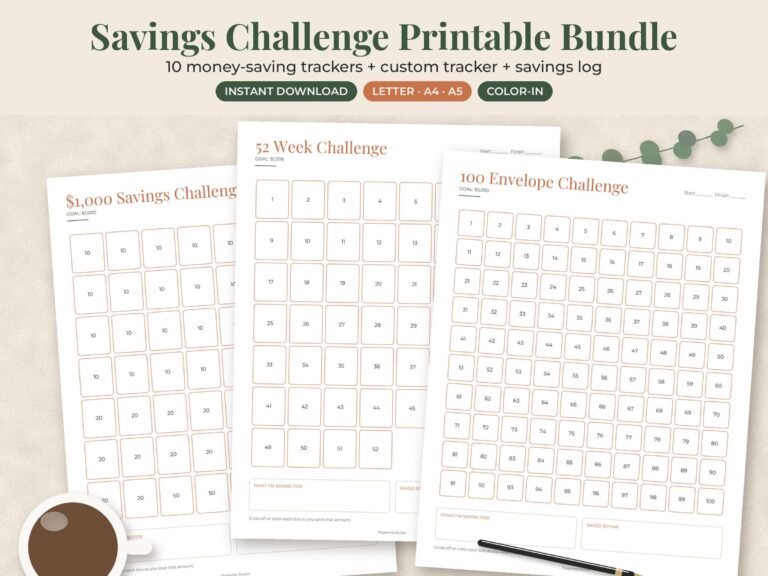
While you work on the big costs, keep a small savings habit going. A savings challenge tracker makes even £5 or £10 a week feel like progress, and those amounts add up to £260 to £520 over a year.
How to budget your monthly salary: a payday routine
Most UK employees are paid monthly, often on the last working day or a fixed date like the 25th. A month is a long time to make one payment last, so a routine helps.
- On payday, pay yourself first. A standing order moves your savings amount to a separate account the same day.
- Let direct debits handle needs. Line up rent, council tax, energy and phone so they all leave within a few days of payday.
- Split wants into weeks. Divide your wants money by 4 or 5 and move that amount into a spending account or pot each week.
- Keep a buffer. Leave £50 to £100 in your main account for surprises so you don’t dip into savings.
- Check in once a month. Compare plan against reality and adjust next month’s numbers.
MoneyHelper’s free Budget Planner is a good first step if you’ve never listed everything. It adds up your income and outgoings and shows what’s left over, and you can enter monthly or yearly figures.
A simple 50/30/20 calculator for Excel or Google Sheets
You don’t need a special 50/30/20 calculator. In a spreadsheet:
- Put your monthly take-home pay in cell B1.
- In B2 type =B1*0.5 for needs.
- In B3 type =B1*0.3 for wants.
- In B4 type =B1*0.2 for savings and debt.
- Below that, list your actual costs in each bucket and total them so you can see the gap.
Change 0.5, 0.3 and 0.2 to 0.6, 0.2 and 0.2 if you’re using an adjusted split. If you have debts to clear, our debt payoff tracker guide shows how to plan overpayments from the 20% bucket.
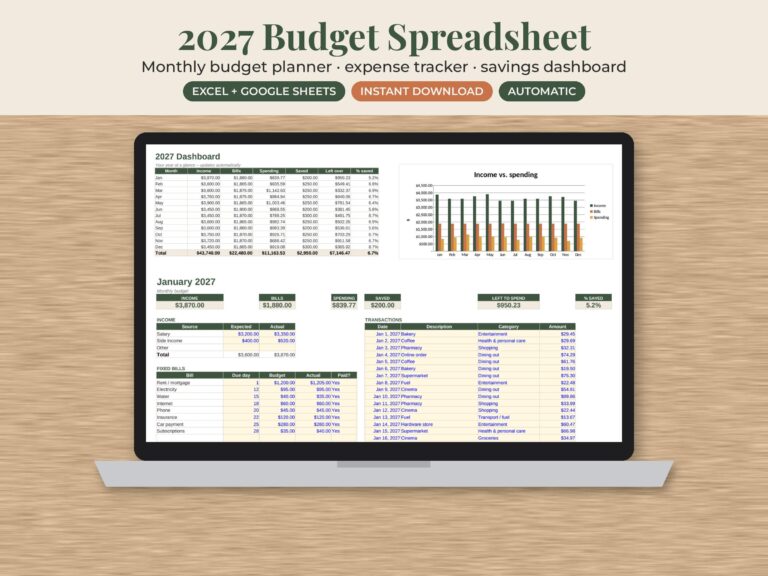
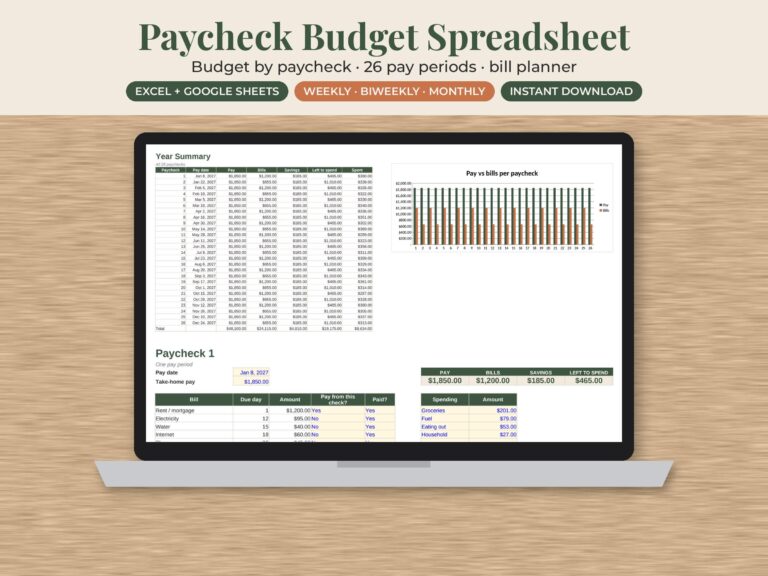
If you’d rather not build it yourself, the 2027 monthly budget spreadsheet has the months and categories laid out for you, and there are more options in our budget templates and spreadsheets collection.
This is general information, not financial advice.