 View details
Car Maintenance Log: Printable Vehicle Service Record
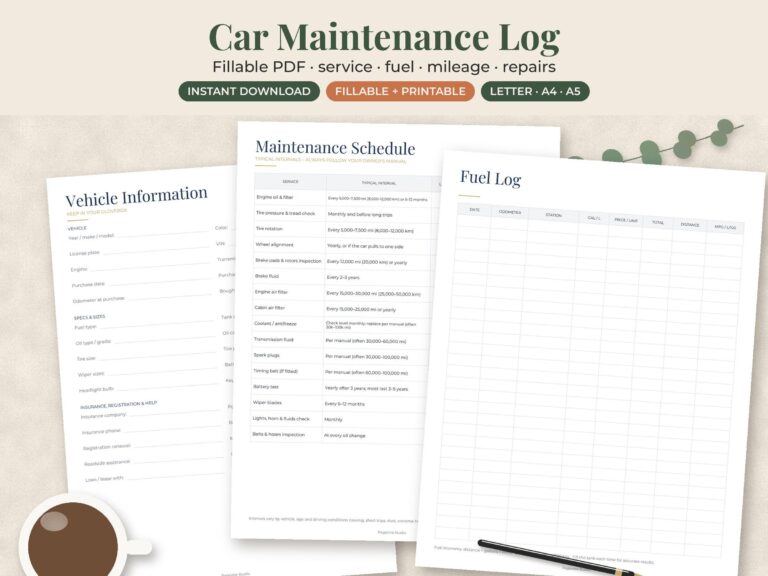
A car maintenance log is one place where you write down every oil change, tire rotation and repair, with the date and the odometer reading. It shows what is due next, proves the car was looked after if you ever need warranty work, and gives a buyer a clear service history when you sell. Each entry takes about two minutes, and the log lives in your glovebox or a home binder.
Below you’ll find what to record, a basic maintenance schedule with typical intervals, and how to print and store your log. It works the same for a sedan, an SUV or a pickup, so you can use it as a truck maintenance log too.
What should a car maintenance log include?
Keep each entry short but complete. If a stranger read your log, they should be able to tell what was done, when, and by whom. These are the columns worth having:
| Column | Example entry | Why it matters |
|---|---|---|
| Date | Oct 12, 2026 | Some services are due by time, not just miles |
| Odometer | 48,215 miles | Most intervals are set by mileage |
| Service done | Oil and filter change, tire rotation | The core record |
| Parts and fluids | 0W-20 full synthetic, 5 qt | Shows the correct grade was used |
| Shop or DIY | Main Street Auto, invoice #2291 | Matches the entry to a receipt |
| Cost | $89.50 | Helps you budget for next year |
| Next due | 53,215 miles or April 2027 | The reminder you’ll actually use |
In Canada, just write odometer readings in kilometres. In the UK, file your MOT certificates with the log so the whole history stays together.
How often does a car need maintenance?
Your owner’s manual is the final word, because intervals change with the engine, the oil and how you drive. Use the table as a starting point, then copy your manual’s numbers into the “next due” column.
| Item | Typical interval | Source |
|---|---|---|
| Engine oil and filter | Every 5,000 to 7,500 miles for most engines | AAA |
| Tire pressure, including the spare | At least once a month, with tires cold | NHTSA |
| Tire tread | At least once a month, when you check pressure | NHTSA |
| Tire rotation | Every 5,000 to 8,000 miles, if your manufacturer recommends it | NHTSA |
| Safety recalls | Check your VIN a few times a year | NHTSA recall lookup |
| Battery, wipers, coolant, lights | Every fall, before winter weather arrives | NHTSA winter tips |
| Air filter, brake fluid, transmission fluid, spark plugs | Varies by vehicle | Owner’s manual |
Two details trip people up. AAA says to follow your manual’s more frequent “severe service” schedule if you mostly make short trips of 5 miles or less or drive in stop-and-go traffic, which describes a lot of school runs and city commutes. And fueleconomy.gov points out that the right tire pressure is on the sticker in the driver’s door jamb or in the manual, not the maximum printed on the tire sidewall.
For recalls, the NHTSA tool asks for your 17-character VIN, which you’ll find on the lower left of the windshield. Write the VIN on the first page of your log so it’s always handy.
Why keep vehicle maintenance records?
Warranty proof
If something fails while the car is under warranty, the first question is often whether it was maintained. The Federal Trade Commission advises drivers to keep all service records and receipts, no matter who did the work, because they can prove the vehicle was properly maintained. The FTC also says a dealer or manufacturer can’t deny coverage simply because someone other than the dealer worked on the car. A dated log plus receipts makes that case for you.
Resale value
Private buyers want to know the car wasn’t neglected. A log with steady oil changes, tire rotations and repairs at sensible mileages answers that before they ask. Hand over the log and the receipt folder with the keys.
Budgeting and spotting problems
Add up a year of entries and you know what the car really costs to run. That number is the starting point for a car repair fund on a sinking funds tracker. A fuel log helps too: if your miles per gallon drop for no clear reason, check tire pressure first. Fueleconomy.gov notes that under-inflated tires can lower gas mileage by about 0.2% for every 1 psi drop.
What’s inside the Pagevine car maintenance log?
Our printable car maintenance log and vehicle service record keeps service history, mileage and fuel stops in one place. It includes:
- Car maintenance log pages for routine services such as oil changes and tire rotations.
- A vehicle service record for repairs and larger jobs.
- A mileage tracker, useful if you drive for rideshare or delivery work.
- A fuel tracker for fill-ups and fuel economy.
It’s an instant download from our Etsy shop. Print it at home or at a print shop, or use it digitally in an app such as GoodNotes. Families with more than one car can print a set for each vehicle.
How do I print it and keep it in the glovebox?
- Check the page size in the listing. If it matches your paper, print at “Actual size” or 100% so the lines stay the right height for handwriting. If it doesn’t, for example a Letter file on A4 paper, choose “Fit to page.”
- Use heavier paper. A glovebox gets hot, cold and crumpled. Paper of 28 to 32 lb, or light cardstock, lasts much longer than standard copy paper.
- Pick a holder. A zip pouch or half-size binder fits most gloveboxes. Add a clear pocket at the back for receipts.
- Keep a master copy at home. File older pages and receipts in your home management binder and keep only the current page in the car.
- Photograph each new page. A quick phone photo after every service means one spilled coffee doesn’t wipe out your history.
Getting ready for colder weather? Our winter car maintenance checklist covers the battery, tires and emergency kit, and you can mark service dates on a 2027 year planner.
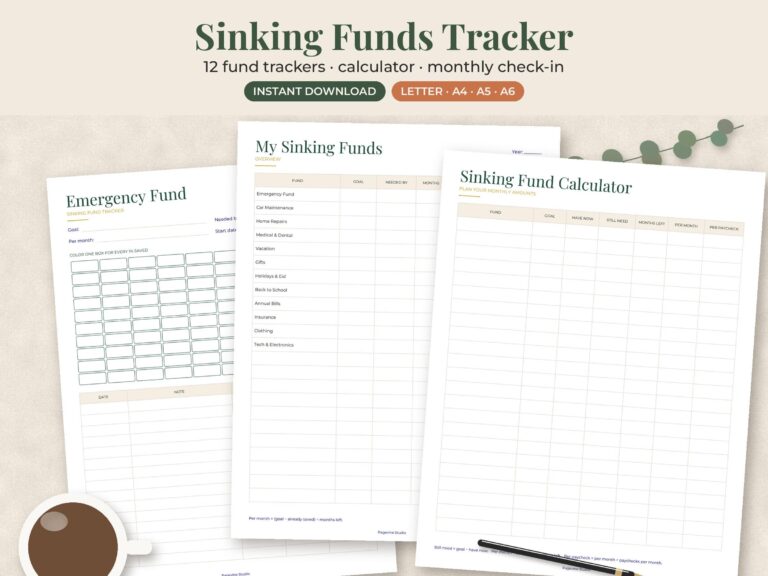

Start your log with today’s odometer reading and the last service you remember. Grab the car maintenance log from our shop, or browse more home organization printables.