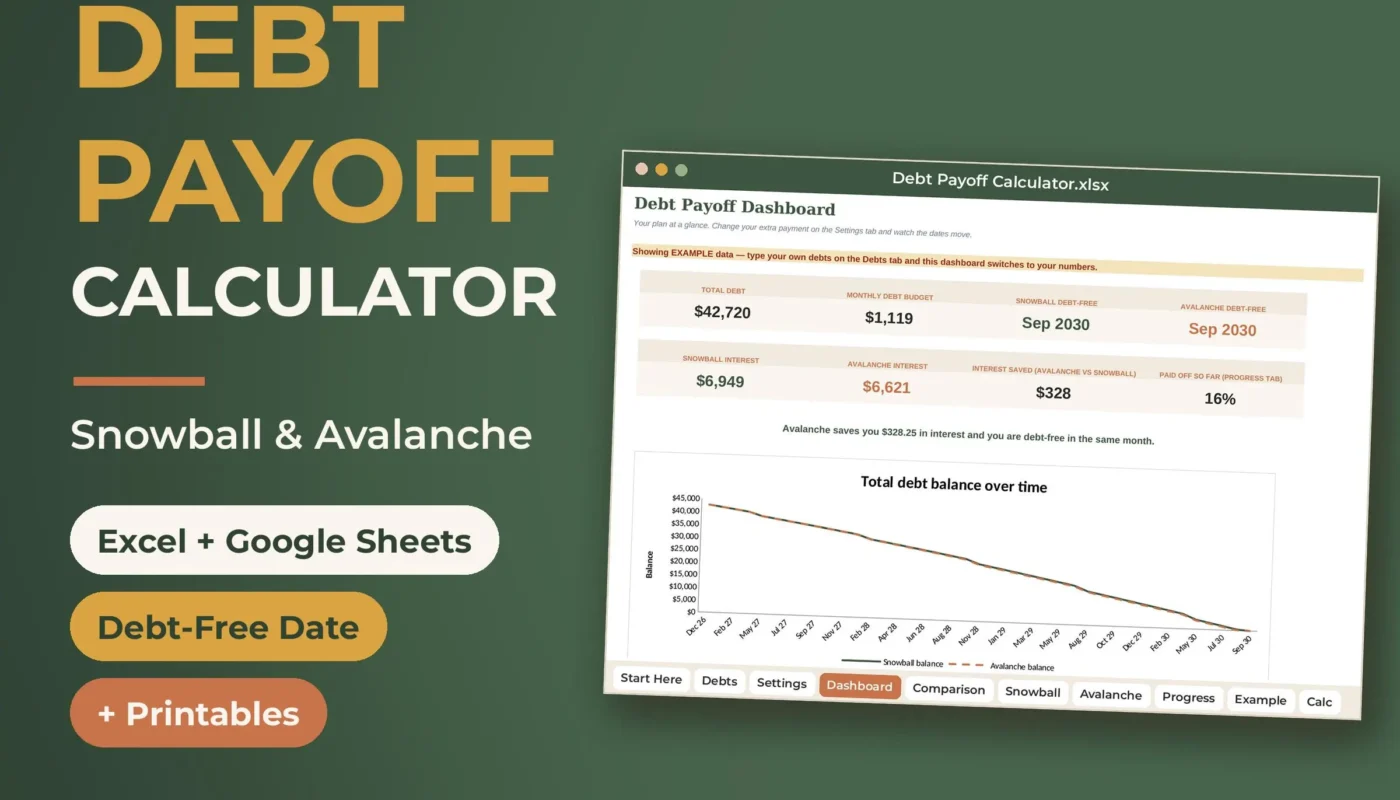
In the debt snowball vs avalanche debate, the short answer is this: the avalanche method (highest interest rate first) almost always costs less and finishes the same or sooner. The snowball method (smallest balance first) gets you your first win faster, and research suggests that early win helps many people stick with the plan.
How big is the gap? It depends on your debts. Below are two worked examples with real numbers, so you can see when the difference is $200 and when it’s over $1,000.
This is general information, not financial advice.
How each method works
Both methods start the same way. You pay the minimum on every debt, every month. Then you put any extra money toward one “target” debt. When that debt is gone, its payment rolls onto the next target. That growing payment is the “snowball.”
The only difference is the order.
| Debt snowball | Debt avalanche | |
|---|---|---|
| Pay off first | Smallest balance | Highest interest rate (APR) |
| Total interest | Same or higher | Lowest |
| First debt gone | Usually sooner | Can take longer |
| Best for | People who need visible progress | People who stay on track without early wins |
The Consumer Financial Protection Bureau describes both: one approach focuses on your debts with the highest rate of interest, the other on your smallest debt. Neither is wrong. They trade money for motivation.
Worked example 1: four debts, $700 a month
Say you have these four debts and can pay $700 a month in total. The minimums add up to $465, so you have $235 extra each month.
| Debt | Balance | APR | Minimum |
|---|---|---|---|
| Store card | $900 | 24.99% | $35 |
| Personal loan | $3,100 | 13% | $95 |
| Credit card | $4,200 | 22.9% | $105 |
| Car loan | $7,800 | 7.5% | $230 |
| Total | $16,000 | $465 |
We ran both plans month by month, with interest estimated as balance × APR ÷ 12.
| Result | Snowball | Avalanche |
|---|---|---|
| Order | Store card, personal loan, credit card, car loan | Store card, credit card, personal loan, car loan |
| First debt paid off | Month 4 | Month 4 |
| Second debt paid off | Month 12 | Month 16 |
| Debt-free | Month 27 | Month 27 |
| Total interest | About $2,449 | About $2,220 |
The avalanche saves about $229. Both plans finish in the same month. The snowball clears the personal loan four months sooner, so you have one fewer bill to juggle for most of the first year and a half.
Here, the gap is small. If the snowball keeps you going, $229 over two years is a fair price.
Worked example 2: one big, expensive credit card
Now a different mix. Three debts, $800 a month in total.
| Debt | Balance | APR | Minimum |
|---|---|---|---|
| Student loan | $2,000 | 5% | $50 |
| Car loan | $6,000 | 6.9% | $190 |
| Credit card | $9,000 | 24% | $270 |
The snowball pays the cheap student loan first and leaves the 24% card until last. The avalanche attacks the card right away.
| Result | Snowball | Avalanche |
|---|---|---|
| First debt paid off | Month 6 | Month 20 |
| Debt-free | Month 27 | Month 25 |
| Total interest | About $3,846 | About $2,665 |
This time the avalanche saves about $1,181 and finishes two months sooner. But look at the first win: month 6 with the snowball, month 20 with the avalanche. Twenty months is a long time to wait for a debt to disappear.
The pattern
The gap is small when your smallest debts also have high rates. It grows when your biggest debt has the highest rate. Run your own numbers before you pick.
Debt snowball vs avalanche: which is better for you?
On paper, the avalanche wins. In real life, the best plan is the one you finish.
There’s research behind the snowball. A study from Northwestern’s Kellogg School of Management looked at how about 6,000 people paid off credit card debt through a debt settlement program. The researchers found that people who paid off small balances first were more likely to clear all their debt, even though paying the highest-rate cards first usually costs less. Later work summarized in Harvard Business Review reached a similar takeaway: focus on paying off the smallest debt first.
Ask yourself these questions:
- Have you started a payoff plan before and quit? Try the snowball.
- Is your biggest debt also your highest rate? The avalanche will save you real money. Consider it.
- Are your rates close together? The difference will be small. Pick whichever feels better.
- Do you have a small debt you could clear in 1 to 3 months? Some people clear that one first for a quick win, then switch to avalanche order. That hybrid is perfectly fine.
Which debt should I pay off first?
Before either method, cover the basics. Pay the minimum on everything so you avoid late fees and credit damage. Keep a small cash buffer, so one surprise bill doesn’t go back on a card.
Then:
- List every debt: name, balance, APR and minimum payment.
- Sort the list by balance (snowball) or by APR (avalanche).
- Find your extra amount: what’s left after bills, food and minimums. Even $50 counts.
- Put all the extra money on the top debt only.
- When it’s gone, add its full payment to the next debt on the list.
Also check whether any minimum payment is less than the monthly interest. If it is, that balance is growing, and it should jump to the top of your list. The FTC also suggests calling your credit card company to ask for a lower interest rate. A lower rate helps no matter which method you use.
How to pay off debt in 2027: a spreadsheet walkthrough
Can you use a spreadsheet to track debt payoff? Yes, and it’s the easiest way to compare methods with your own numbers. Here’s what a good debt snowball vs avalanche Excel spreadsheet should do:
- Take your real debts: name, balance, APR, minimum and due date for each.
- Run both orders: a snowball schedule and an avalanche schedule, with payments rolling over automatically.
- Show the trade-off: debt-free date and total interest for each method side by side.
- Warn you when a minimum payment doesn’t cover the interest.
- Track progress: a monthly log so you can update balances from your statements.
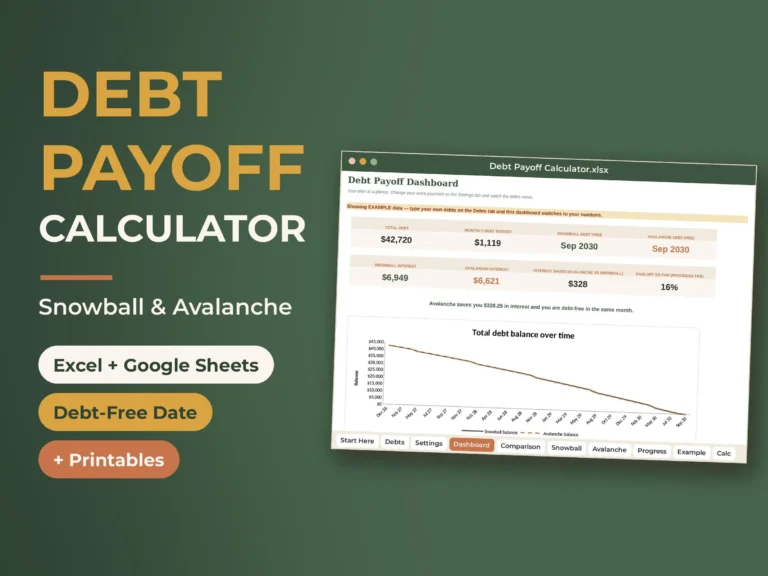
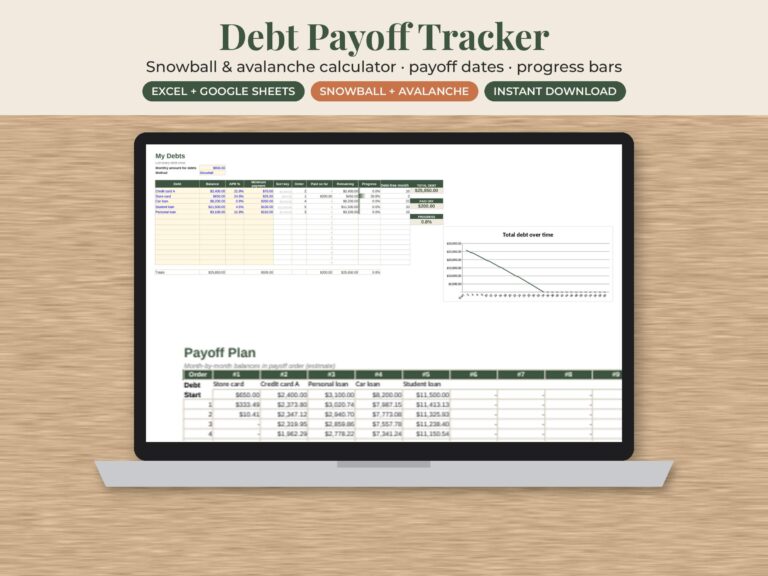
Our debt snowball spreadsheet and payoff calculator does all of this for up to 15 debts, in Excel or Google Sheets. If you’d rather keep it simple, the debt payoff tracker spreadsheet focuses on logging payments and watching balances fall.
A tip from experience: update the balances from your real statements once a month. Lenders may calculate interest daily or add fees, so any spreadsheet’s dates are estimates. The habit of checking in matters more than perfect math.
Mistakes that slow down either method
The method matters less than these common slip-ups. Each one can cost more than the gap between snowball and avalanche.
- Spreading the extra money around. $50 extra on four debts feels fair, but it delays every payoff. Put it all on one target.
- Not rolling the payment over. When a debt is gone, it’s tempting to enjoy the freed-up cash. Keep sending it to the next debt, or the snowball never grows.
- Adding new charges. If a card you’re paying off is still in your wallet, new spending can cancel your progress. Some people freeze the card or remove it from shopping apps.
- Skipping the buffer. With no savings at all, a car repair goes straight back onto a card. A small starter fund protects the plan.
- Switching methods every month. Pick one, give it six months, then review.
Where to find the extra money
Whichever method you choose, the extra payment does the heavy lifting. In example 1, paying a flat $465 a month (the starting minimums, rolled over as each debt closes) would take 46 months and cost about $5,000 in interest. Adding $235 a month cuts that to 27 months and saves about $2,550.
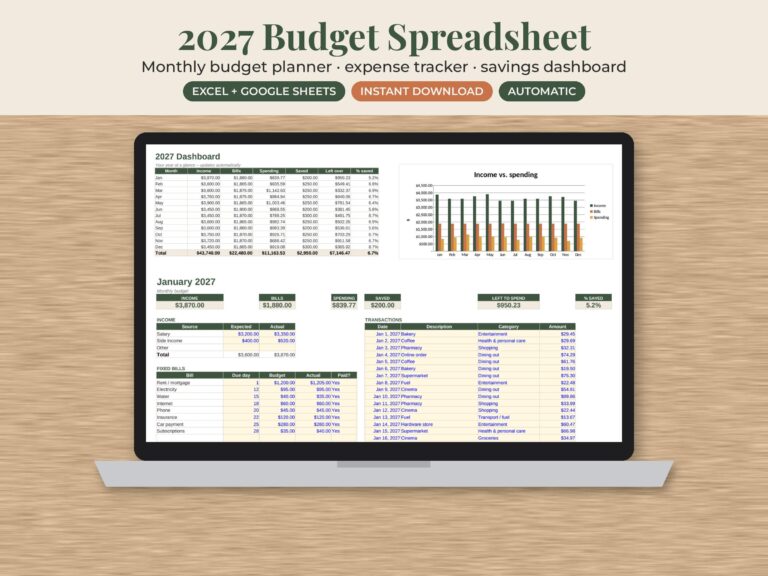
A monthly budget is where that money comes from. Track one month of spending, then decide on one or two cuts you can live with. A 2027 monthly budget spreadsheet makes this easier to set up in January. For more tools, see our debt payoff tracker guide and the full budget templates and spreadsheets collection.
If your debts feel unmanageable, a reputable nonprofit credit counselor can help. The FTC notes that good counselors won’t charge you before they do anything, and only scammers collect fees before settling any of your debts.