
The best grocery list template is split into store sections, in the order you walk the aisles: produce first, then bakery, meat and fish, dairy and eggs, frozen, pantry staples and household items last. You fill it in three steps: write the week’s meals, check what’s already in your kitchen, then add only what’s missing under the right section. A trip that used to take an hour of zigzagging can drop to 30 or 40 minutes.
Below is a master list of 12 store sections you can copy, a sample week that turns a menu into a list, a 10-minute pantry check, and what USDA’s food cost figures suggest for your grocery budget.
Which grocery list format suits you?
| Format | Best for | Time each week | Downside |
|---|---|---|---|
| Printable grocery list by section | One weekly shop, families who plan on paper | 15 minutes | You rewrite staples each week |
| Running list on the fridge | Catching items as they run out | A few seconds per item | Not sorted, easy to forget meals |
| Meal planner spreadsheet | People who repeat recipes and track a budget | 10 minutes once recipes are in | Takes an hour or two to set up |
| Shared phone app | Two adults shopping on different days | A few minutes | Lists get messy without sections |
Many families use two: a running list on the fridge during the week and a printed list by section for the main shop. MyPlate’s meal planning advice suggests both ideas, recommending you “Keep an ongoing list of foods you need on your refrigerator” and “Organize your grocery list by store section or food groups.”
Grocery list template: the store-section master list
Write these 12 headings on your template in the order your store is laid out. Most supermarkets put fresh food around the edges and packaged food in the middle aisles.
1. Produce
Fruit, vegetables, fresh herbs, salad greens, onions, garlic and potatoes. Split the box into “fruit” and “veg” if you buy a lot. Write quantities (“6 bananas”, “2 lb carrots”) so you don’t overbuy what spoils first.
2. Bakery and bread
Sliced bread, wraps, pita, rolls and bagels. Bread freezes well, so this is a good place to note “1 for now, 1 for freezer”.
3. Meat, poultry and fish
Chicken, beef, lamb, ground meat and fish. Note the weight each recipe needs. If you buy family packs to split and freeze, add a reminder so you remember freezer bags.
4. Deli and prepared foods
Sliced cheese, hummus, dips, rotisserie chicken and ready salads. Keep this section short; prepared food is where grocery bills climb fastest.
5. Dairy and eggs
Milk, yogurt, butter, cheese blocks, cream and eggs. Check dates at the shelf and reach to the back, where the newer stock usually sits.
6. Frozen
Frozen vegetables, fruit, fish, ready meals and ice cream. Shop this section near the end so food stays cold on the way home. Frozen vegetables are a handy backup for nights when fresh ones run out.
7. Rice, pasta and grains
Rice, pasta, oats, couscous, flour and lentils. These are your cheapest fillers, so they belong on a budget meal planner every week.
8. Canned and jarred
Beans, chickpeas, tomatoes, tuna, soups, pasta sauce and peanut butter. Before writing anything here, check the cupboard. This is the section where duplicates pile up.
9. Baking, oils and spices
Oil, sugar, baking powder, vinegar, stock cubes and spices. You don’t buy these weekly, so keep a “running low” note on the fridge and move it to this section on list day.
10. Breakfast and snacks
Cereal, crackers, nuts, granola bars and dried fruit. Set a limit, such as “3 snack items”, if this section tends to grow in the cart.
11. Drinks
Water, juice, tea, coffee and milk alternatives. Heavy items like water bottles can go last so they sit at the bottom of the cart.
12. Household and personal care
Dish soap, paper towels, trash bags, toothpaste and laundry supplies. These cost more at a supermarket than at a discount store, so mark anything you can buy elsewhere.
How to pair a grocery list with a weekly meal plan
A grocery list works best when it comes straight from a weekly menu. Here is the order we use, and it takes about 15 minutes.
- Pick your dinners first. Plan five dinners and leave two nights for leftovers or a simple fallback like eggs on toast.
- Add breakfasts, lunches and snacks. Most families repeat these, so a short default list saves time.
- List each meal’s ingredients. Write them next to the meal on your weekly menu, with amounts.
- Check the kitchen. Cross off anything you already have (see the pantry check below).
- Sort what’s left by section. Copy each missing item under its store heading on the grocery list template.
- Add staples from the fridge list. Milk, bread, dish soap and anything else noted during the week.
Reuse ingredients across meals where you can. One bunch of cilantro, a bag of spinach or a big pack of chicken thighs can cover two or three dinners, which means less waste.
A sample week: from menu to grocery list
Here’s a five-dinner weekly menu for a family of four, and how its ingredients land on the list. Pantry items already in the cupboard (rice, oil, spices, pasta) are crossed off first.
| Dinner | What goes on the list |
|---|---|
| Mon: Chicken and vegetable stir-fry with rice | Produce: 2 bell peppers, broccoli, garlic. Meat: 2 lb chicken thighs |
| Tue: Lentil soup with bread | Produce: carrots, celery, onions. Bakery: 1 loaf |
| Wed: Pasta with tomato sauce and spinach | Produce: spinach. Canned: 2 cans crushed tomatoes. Dairy: parmesan |
| Thu: Chicken wraps (leftover chicken from Monday’s pack) | Bakery: wraps. Produce: lettuce, tomatoes. Dairy: yogurt for sauce |
| Fri: Baked fish, potatoes and frozen peas | Meat and fish: 4 fillets. Produce: 3 lb potatoes. Frozen: peas |
Notice the overlaps: chicken thighs for two meals, onions and garlic across three, and spinach that can go into Thursday’s wraps too. That is how a weekly menu keeps a grocery shopping list short.
The 10-minute pantry check before every shop
MyPlate’s first planning tip is simple: “See what you already have.” Do it in this order, because fresh food spoils first.
- Fridge (3 minutes). Pull out anything that needs using in the next two days and put it on a “use first” shelf. Plan one meal around it.
- Freezer (2 minutes). Note meat, bread and vegetables you can build meals from, so you don’t buy them again.
- Pantry shelves (3 minutes). Check your top 10 staples: rice, pasta, oil, flour, canned tomatoes, beans, stock, oats, sugar and peanut butter.
- Cleaning cupboard (2 minutes). Look at dish soap, laundry supplies and paper goods.
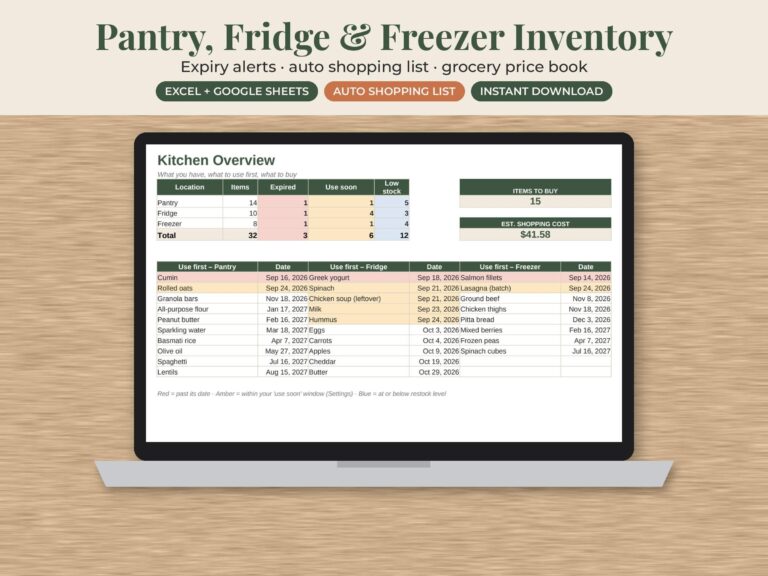
Use a simple restock rule: when you open the last one, it goes on the list. Put new items behind older ones so the oldest get used first. A pantry inventory sheet taped inside the cupboard door makes this check even faster.
How much should you budget for groceries?
A useful benchmark is the USDA Food Plans, which estimate the cost of a healthy diet built from meals and snacks made at home, at four cost levels: Thrifty, Low-Cost, Moderate-Cost and Liberal. USDA updates the costs monthly.
In the August 2026 cost of food reports, the Thrifty plan for USDA’s reference family of four (two adults aged 20 to 50 and children aged 6 to 8 and 9 to 11) is $236.30 a week, or $1,023.70 a month. Adding up the per-person figures for a similar family gives about $1,126 a month on the Low-Cost plan and about $1,388 on the Moderate-Cost plan.
These are US averages, so your area may cost more or less. To turn them into a budget meal planner:
- Set a weekly cap. Divide your monthly grocery budget by 4.3 and write the number at the top of your list.
- Price the list before you go. Jot an estimated price next to each item. If the total is over your cap, swap a meal, not a staple.
- Compare unit prices. The small “per ounce” or “per pound” price on the shelf tag shows which size is actually cheaper.
- Keep a price book. Note what your 20 most-bought items cost at each store. After a month you’ll know where to buy what.
- Build two cheap dinners into every week. Lentils, beans, eggs and rice dishes pull the weekly average down.
For a full walkthrough with real numbers, see our guide on how to meal plan on a budget. This is general information, not financial advice.
6 grocery list habits that save the most time
- Match the list to one store. If you shop at two stores, give each its own column so you don’t hunt for items one store doesn’t carry.
- Write amounts, not just names. “Milk” leads to guessing; “2 gallons milk” doesn’t.
- Keep the template in the same spot. A clipboard or magnet on the fridge means everyone adds to it.
- Shop the list, not the shelves. Allow one “extra” line per trip for something new, and stick to it.
- Snap a photo before you leave. If you forget the paper, the list is still on your phone.
- Save last week’s list. On a busy week, just repeat a past menu and its list with small changes.
Ready-made grocery list and meal planning templates
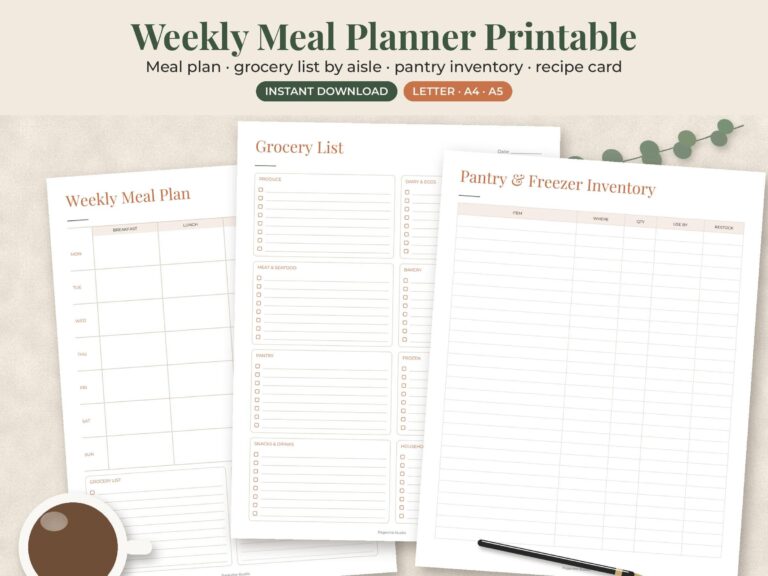
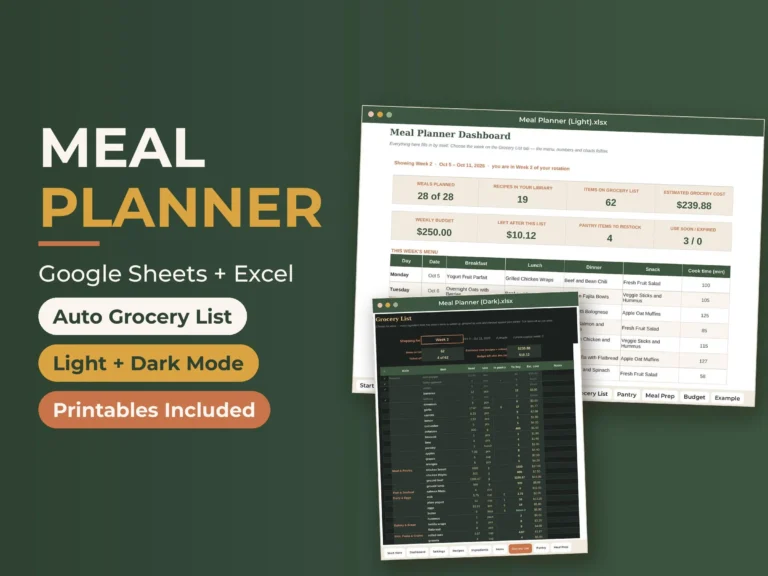
You can make a grocery list template by hand with the 12 headings above. If you’d rather print one that’s already laid out, the weekly meal planner and grocery list pairs a weekly menu page with a matching shopping list. If you’d like the list built for you, the meal planner spreadsheet totals ingredients from your planned meals, groups them by store aisle, subtracts what’s in your pantry and tracks a weekly grocery budget. The pantry inventory spreadsheet covers the pantry check, with a fridge and freezer tracker and a grocery price book. Browse more on our meal planner template page.