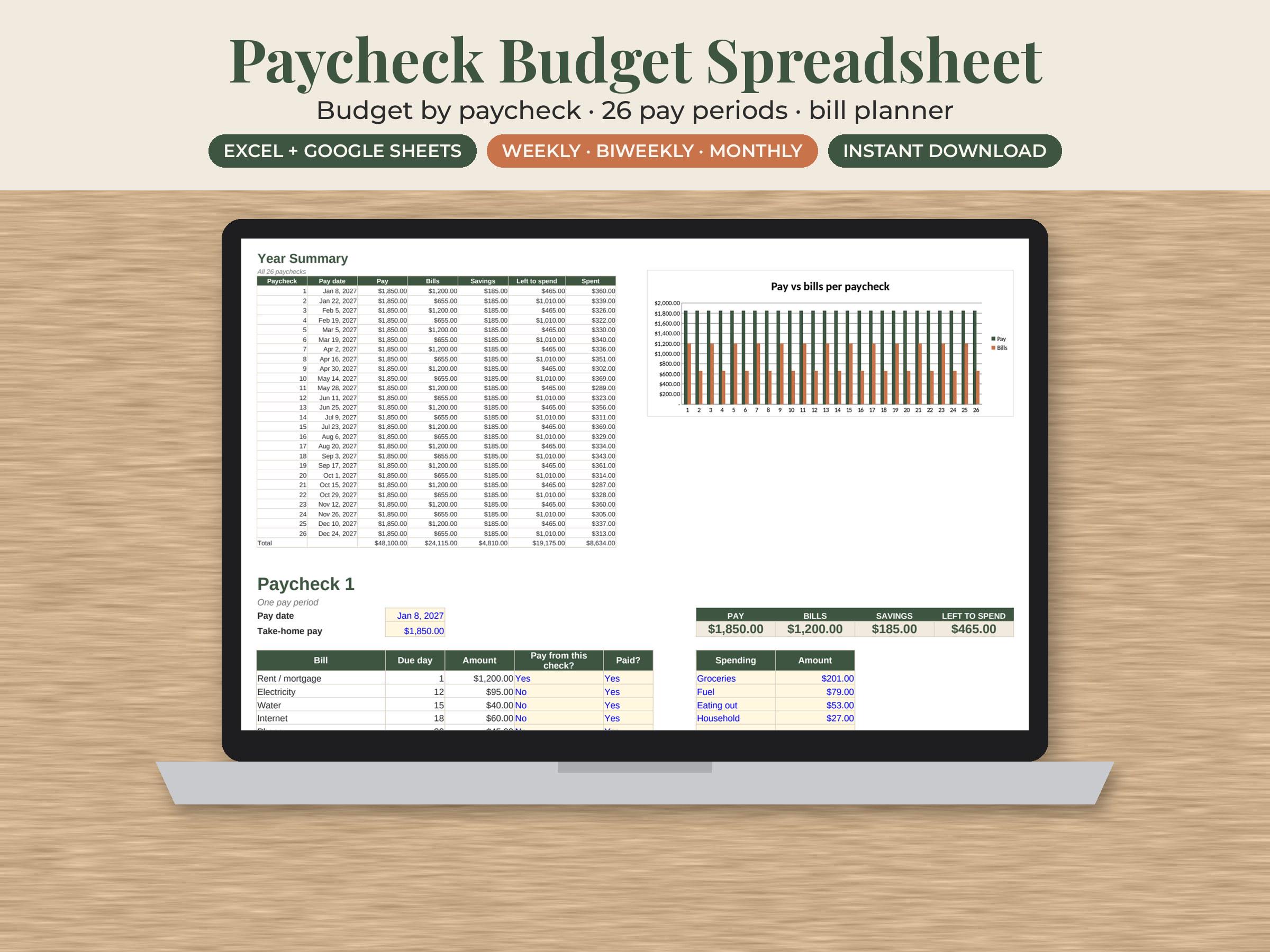
Here’s how to budget in Canada when you’re paid every two weeks: plan each month on two pay cheques, pay the bills due in the first half of the month from the first cheque and the rest from the second, and move savings to your TFSA or emergency fund on payday. The two extra cheques each year become bonus money.
Below is a step-by-step setup, a worked example in Canadian dollars, and plain answers to the questions Canadians ask most: rent, TFSA or RRSP, and where to find a free planner.
How do Canadians make a monthly budget?
The Financial Consumer Agency of Canada (FCAC) recommends a simple process in its guide to making a budget: list your income, savings and expenses using recent pay stubs and statements, sort expenses into needs and wants, and compare your plan to what you really spend at the end of each month.
FCAC also suggests tracking everything you buy for one or two months, down to the daily coffee. Its example makes the point: $3 a day on coffee adds up to more than $1,000 a year.
Here’s that process turned into a checklist:
- Find your net pay per cheque. Use your pay stub, after income tax, CPP, EI and any benefits or pension deductions.
- List fixed bills with due dates. Rent or mortgage, hydro, tenant or home insurance, car insurance, phone, internet, minimum debt payments.
- Estimate variable costs. Groceries, gas or transit, household items, kids’ costs. Use your last two months of statements.
- Sort into needs and wants. Needs keep you housed, fed, insured and getting to work. Wants are the rest.
- Set savings first. Pick an amount per cheque for an emergency fund, a TFSA or RRSP, and debt payoff.
- Review monthly. Adjust any category that doesn’t match reality.
How to budget a biweekly pay cheque: a worked example
Say your salary is about $70,000 before tax, and your take-home pay is $2,000 every two weeks. That’s 26 cheques, or $52,000 a year. For budgeting, you plan on $4,000 a month: two cheques.
Why not use the yearly total divided by 12 ($4,333)? Because in 10 months of the year you only receive two cheques. A budget built on the average runs short most of the time.
| Line | Cheque 1 (bills due 1st to 14th) | Cheque 2 (bills due 15th to month-end) |
|---|---|---|
| Rent (half each) | $800 | $800 |
| Car insurance | $160 | – |
| Phone | $55 | – |
| Tenant insurance | $25 | – |
| Hydro and utilities | – | $120 |
| Internet | – | $65 |
| Credit card minimum | – | $150 |
| Subscriptions | – | $30 |
| Groceries (2 weeks) | $325 | $325 |
| Gas or transit (2 weeks) | $90 | $90 |
| TFSA or savings | $150 | $150 |
| Emergency fund | $100 | – |
| Personal and fun money | $200 | $200 |
| Buffer | $95 | $70 |
| Total | $2,000 | $2,000 |
Each cheque reaches zero, rent is ready on the 1st, and $400 a month goes to savings. That’s 10% of take-home, a reasonable start that can grow as debts shrink.
If one cheque always runs tight, ask a lender or provider to move a due date. Many let you change it once online, and it’s the easiest way to balance two cheques.
What percentage of income should go to rent in Canada?
The common guideline comes from Canada Mortgage and Housing Corporation. CMHC says housing is considered affordable if it costs less than 30% of a household’s before-tax income.
Note the word before-tax. In our example, $70,000 a year is about $5,833 a month before tax. Thirty percent of that is $1,750, so $1,600 rent fits the guideline. As a share of take-home pay, though, the same rent is 40%. That’s why the rest of the budget can feel squeezed even when rent is “affordable.”
In Toronto, Vancouver and other high-cost cities, many renters pay well over 30%. If that’s you, it’s more realistic to cut wants and keep savings small but steady than to aim for a textbook split you can’t reach.
Should I save in a TFSA or RRSP first?
Both are tax-advantaged, but they work in opposite ways. Here’s the short version.
| TFSA | RRSP | |
|---|---|---|
| Tax when you put money in | No deduction | Contributions can reduce your tax |
| Tax when you take money out | None | Generally taxed as income |
| Room after a withdrawal | Comes back on January 1 of the next year | Generally does not come back |
| Best for | Emergency fund, short and medium-term goals, flexible saving | Long-term retirement saving, especially at higher incomes |
The CRA confirms that the TFSA dollar limit for 2026 is $7,000, and that if you withdraw money, you regain the same amount of room on January 1 of the following year. Check the CRA site for the 2027 limit once it’s announced, and check your own room in CRA My Account before contributing.
For RRSPs, the CRA explains that deductible contributions can reduce your tax, and that you generally pay tax when you receive payments from the plan.
A practical order many people follow
- Take any employer match first if your workplace offers a group RRSP or pension match. It’s part of your pay.
- Build an emergency fund, often in a TFSA savings account, so the money is easy to reach and growth is tax-free.
- Pay down high-interest debt. Credit card interest usually outruns investment returns.
- Then split between TFSA and RRSP based on your income now and what you expect in retirement.
If you’re saving for a first home, also look into the First Home Savings Account (FHSA). And because tax situations vary, it’s worth a quick chat with a qualified adviser before big contributions.
Which months have three pay cheques in 2027?
With 26 cheques a year, two months have three. In 2027 it depends on your first payday. These dates assume pay lands exactly every 14 days.
| First payday in 2027 | Three-cheque months |
|---|---|
| Thursday, January 7 | April, September |
| Friday, January 8 | April, October |
| Monday, January 11 | May, November |
| Wednesday, January 13 | June, December |
| Thursday, January 14 | July, December |
One catch: if your schedule falls on Friday, January 1, that’s New Year’s Day, a statutory holiday. Many employers pay the day before, on December 31, 2026, and your three-cheque months would then be July and December 2027. Confirm with payroll.
Mark both extra paydays on a printable 2027 Canada calendar and give each cheque a job in advance: emergency fund, debt, or a sinking fund for car repairs or winter tires.
Is there a free government budget planner in Canada?
Yes. FCAC runs a free online Budget Planner, linked from its make-a-budget page. You enter your income and expenses, and it compares your spending to average guidelines for each category using colour-coded alerts: green for within the average range, yellow for slightly above, and red for above. You can save your budget online and see suggested next steps.
It’s a good first pass. Many people then move to a spreadsheet they can update every payday, since the planner works month by month.
Where debt payoff fits in a Canadian budget
Minimum payments are needs. Anything above the minimum comes out of your savings line, or from those two extra cheques.
- List every debt with its balance, interest rate and minimum payment.
- Choose a method: highest interest first (avalanche) or smallest balance first (snowball).
- Send every extra dollar to one debt while paying minimums on the rest.
- Track the balances monthly so you can see the progress.
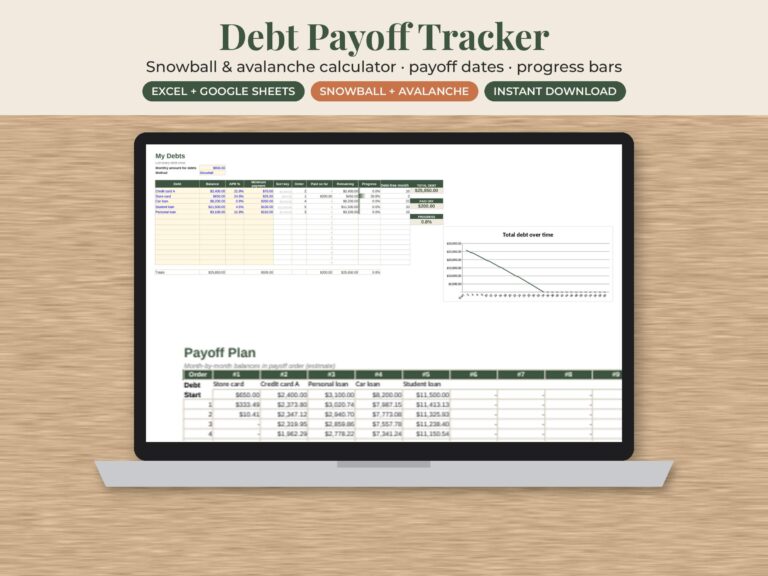
Our debt payoff tracker guide walks through both methods with examples.
How to budget in Canada: a checklist for your first month
- Net pay per cheque written down
- Every bill listed with its due date and assigned to cheque 1 or 2
- Rent split in half across both cheques
- Groceries and gas set as two-week amounts
- Savings moved on payday, not at month-end
- Both 2027 three-cheque months marked with a plan
- A monthly 15-minute review in your calendar
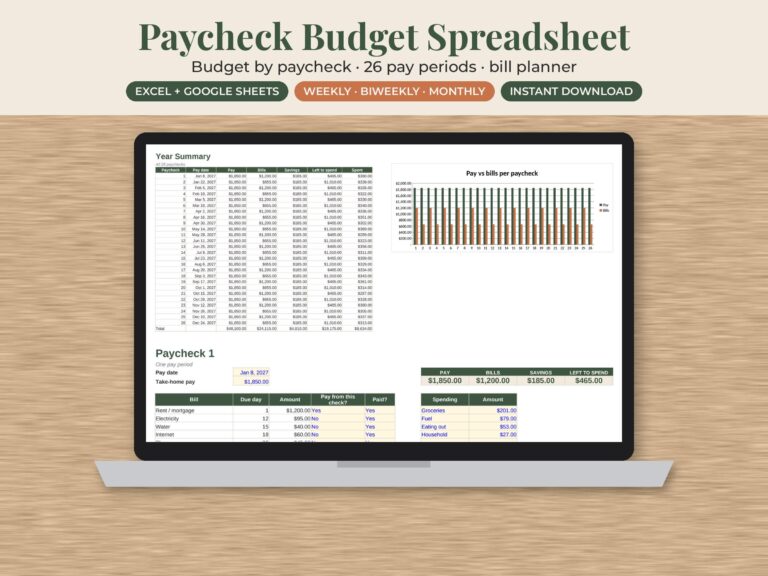
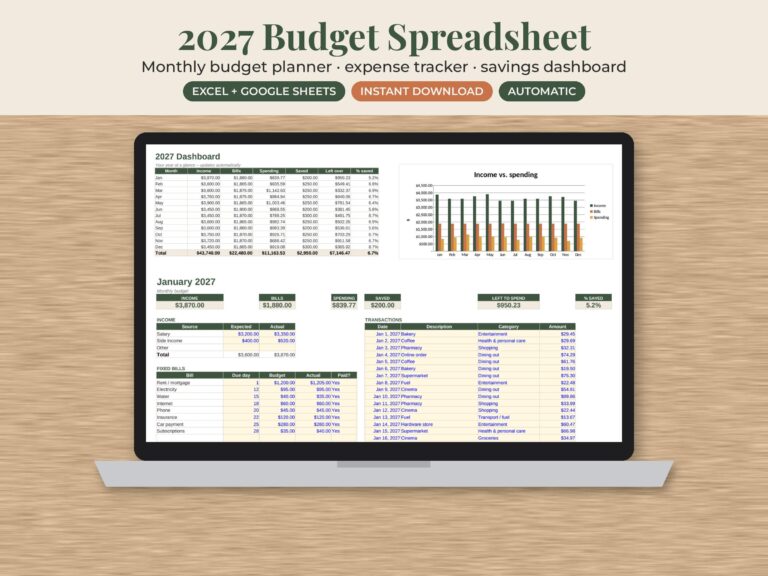
If you’d like a ready-made layout, the paycheque budget spreadsheet splits bills by payday for you, and the debt payoff tracker spreadsheet charts your balances as they fall. More options are in our budget templates and spreadsheets collection.
This is general information, not financial advice.