
The best parent teacher conference questions to ask are short and specific: “What is my child expected to learn this year?”, “Where are they strongest and where are they struggling?”, “How do they get along with other kids?” and “What can I do at home to help?” Ask those four first, and you’ll leave with something useful even if your slot is only 15 minutes.
Below are questions sorted by grade, from preschool to high school, plus how to prepare, what to avoid saying, and what to do the week after.
If you only have 15 minutes, ask these
Many fall conferences are short, and teachers often have families booked back to back. Put your most important questions first, as Reading Rockets’ conference guide recommends, in case time runs out.
- What is my child expected to learn this year, and how will it be graded?
- What are their strongest and weakest subjects right now?
- Does my child seem happy at school? Who do they spend time with?
- Is there anything you’ve noticed that I should know about?
- What is one thing I can do at home this month to help?
- What’s the best way to reach you, and when should we check in next?
Write these on a card or a printed form and bring it with you. When nerves kick in, it’s easy to forget what you meant to ask.
Parent teacher conference questions for preschool
At this age, the conference is mostly about social skills, routines and independence. Academic skills matter less than whether your child is comfortable and growing.
- How does my child handle drop-off and the transitions during the day?
- Do they play with other children, or mostly on their own?
- How do they handle sharing, waiting their turn and hearing “no”?
- Can they follow two-step directions?
- Which activities do they choose when they get free time?
- Is there a self-help skill we should practice at home, like zippers or opening lunch containers?
Parent teacher conference questions for kindergarten
Kindergarten is where reading and number skills start to show up in the conference. Teachers usually talk about letter sounds, sight words, counting, and how your child works in a group.
- Which letters and sounds does my child know, and which are still tricky?
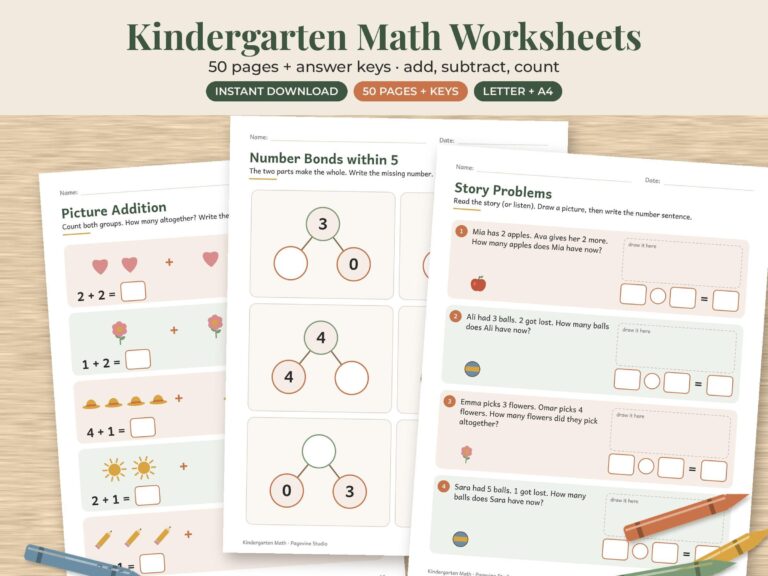
- How are they doing with counting and recognizing numbers?
- Can they sit and focus for a whole group lesson?
- How do they solve problems with friends?
- What should they be able to do by the end of the year?
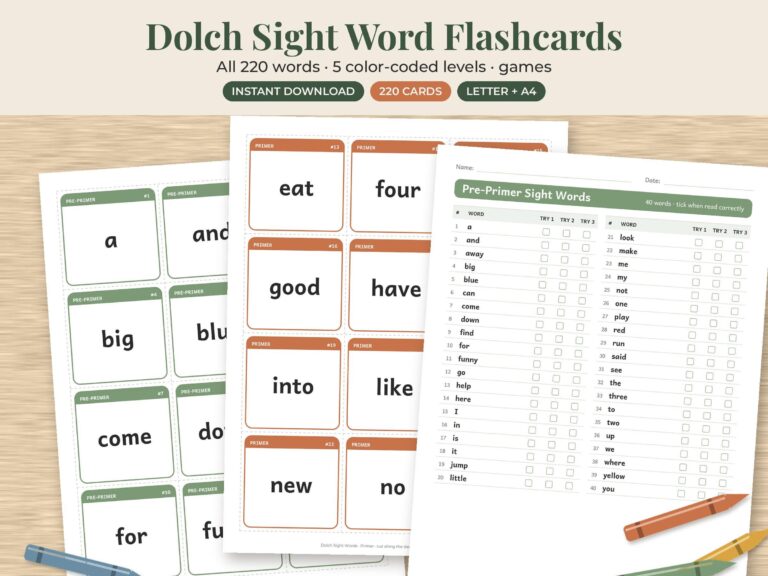
- Which sight words should we practice at home?
What do teachers talk about at kindergarten conferences?
Expect a mix of skills checklists and social notes. Many teachers show a short assessment of letters, sounds and numbers, then share how your child does with routines, friendships and following directions. If you hear a term you don’t know, like “phonemic awareness,” ask what it means and what it looks like at home.
Parent teacher conference questions for 1st grade and 2nd grade
Now reading takes center stage. By the end of these years, most kids are moving from sounding out words to reading for meaning.
- What reading level is my child at, and what level is expected by spring?
- Do they read with expression, or still word by word?
- How are their addition and subtraction facts?
- Do they finish classwork, or do they often run out of time?
- How much reading at home do you recommend each night?
Questions for grades 3 to 5
Upper elementary brings more independent work and more homework. Times tables, longer writing, and organization become big topics.
- Is my child turning in homework on time and complete?
- How are their multiplication facts? Should we practice more at home?
- Can they organize their ideas when they write?
- How do they handle a mistake or a hard task?
- Are they participating in class discussions?
- What should my role be with homework: checking it, or leaving it to them?
If times tables come up, a printable times tables chart on the fridge makes daily practice easy.
Middle school and high school conference questions
In middle and high school, you may meet several teachers for only a few minutes each. Ask your teen which class worries them most and start there. It’s often a good idea to bring them along, too.
- What is the grade right now, and what is it based on?
- Are there missing assignments or tests that can be made up?
- Does my teen ask for help when they need it?
- Are they on track for the next course in this subject?
- For high school: are they on track for graduation credits and the classes they’ll need after high school?
- How do you prefer to communicate with families: email, the school app, or phone?
A homework planner helps older kids track deadlines across six or seven classes. The student planner for homework and exams is built for keeping track of homework and exam dates.
How to prepare for a parent-teacher conference
Ten minutes of prep makes the meeting twice as useful. Here’s a simple timeline.
A few days before
- Talk to your child. Ask what they like most at school, what’s hardest, and how they get along with classmates. Let them know the meeting is to help them, not to get them in trouble.
- Look at recent work. Check graded papers, the school app, and any report card.
- List what the teacher should know. A new sibling, a move, a health issue or a big change at home can affect school, and teachers can’t help with what they don’t know.
- If two parents are going, agree on your main concerns beforehand so you aren’t debating in front of the teacher. Cornell Cooperative Extension’s conference tips make this point, and it saves a lot of time.
The day of the conference
- Arrive on time, with your questions in priority order.
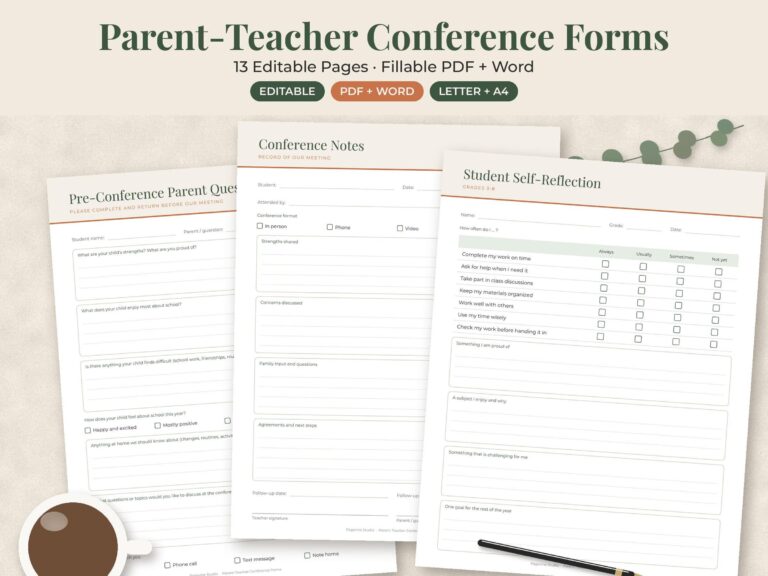
- Take notes. A printed form with spaces for strengths, concerns and next steps is easier than a phone.
- Ask for one or two specific things you can do at home.
- Before you leave, sum up what you agreed and when you’ll check in again.
If English isn’t your first language
You can ask the school for an interpreter. Colorín Colorado’s guide for families notes that parents have the right to request one, and that your child should not be the one translating. If daytime slots don’t work for you, ask for an evening or phone meeting.
How long is a parent-teacher conference?
Most are short, often around 10 to 20 minutes, though your school sets the exact time. Stick to your slot, because other families are usually waiting. If you need more time, it’s fine to say, “Can we set up a follow-up meeting or a call next week?” Teachers usually welcome that.
What should you not say at a parent-teacher conference?
Some lines shut down a good conversation fast. Try swapping them for a better option.
| Instead of saying | Try |
|---|---|
| “He’s never like that at home.” | “That’s new to me. When does it usually happen?” |
| “Last year’s teacher never had a problem.” | “What’s different this year, do you think?” |
| “She’s just lazy.” | “What gets her started when she’s stuck?” |
| “I was bad at math too.” | “What can we practice at home to build confidence?” |
| Nothing, when you disagree | “I see it a bit differently. Can I share what I notice at home?” |
That last one matters. If you stay quiet, the teacher may assume you agree. Calm, honest disagreement leads to a better plan than silent nodding.
Also avoid putting your child down in front of the teacher, or letting anyone else do it. Keep the focus on what helps them next.
After the conference: a 3-step follow-up
- Talk to your child the same day. Start with the good things the teacher said, then explain any plan simply and kindly.
- Start the plan that week. If the teacher suggested 15 minutes of reading a night, put it on the calendar. A visible routine, like a chore and routine chart, helps younger kids stick to it.
- Check back in. Send a short email in three to four weeks: “We’ve been practicing X at home. Are you seeing any change?”
Are you the teacher?
Teachers can use the same questions in reverse to plan each meeting: one strength, one area to work on, one thing families can do at home. Printing a form for each family keeps conferences on time and gives parents something to take home. Our printable parent-teacher conference forms are a ready-made option, and an undated teacher planner keeps your conference schedule in one place. You’ll find more in our kids worksheets and classroom printables collection.