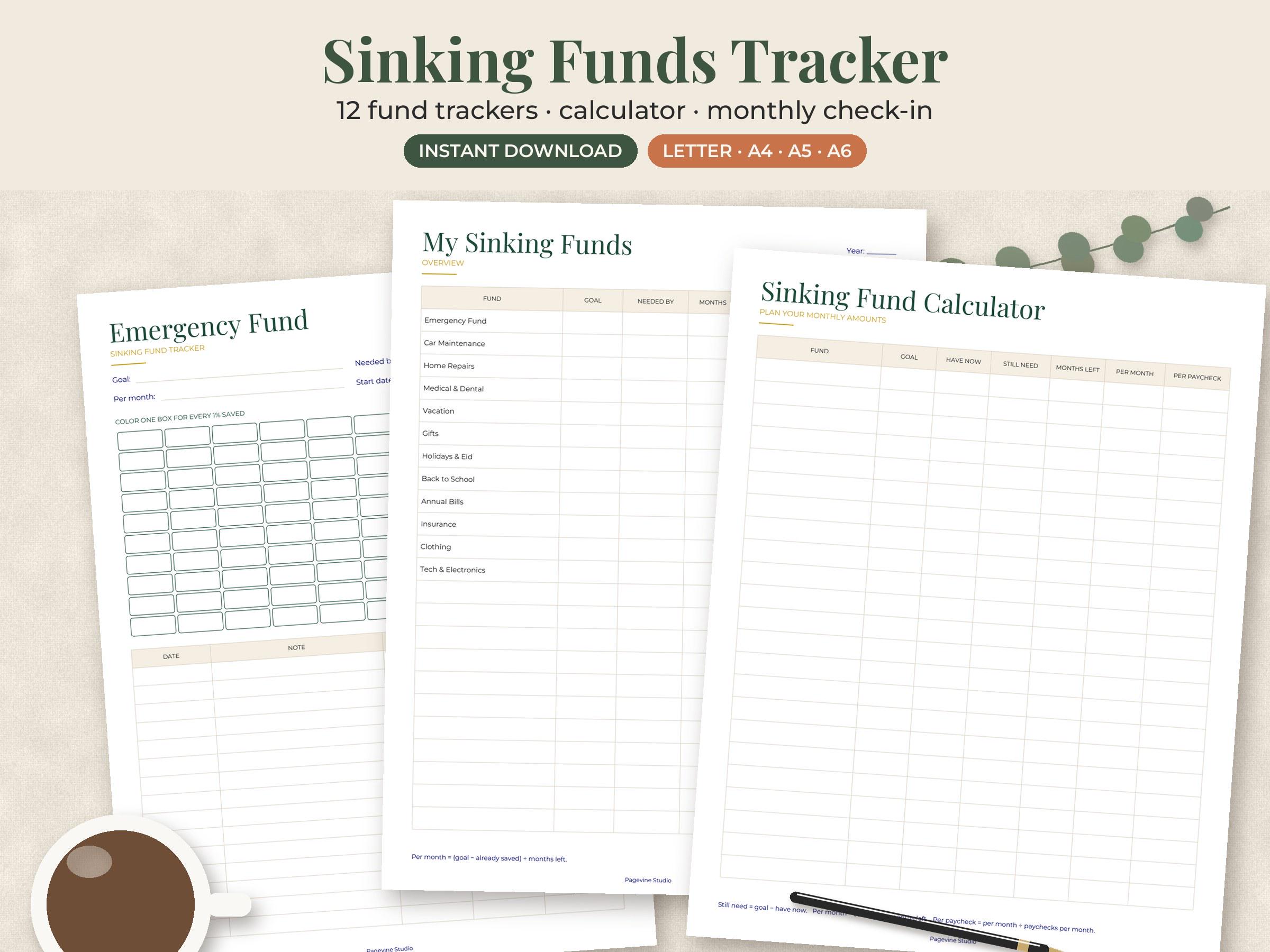
A sinking fund is money you set aside each month for a cost you know is coming, like car insurance, a vet visit or back-to-school shopping. The most common sinking funds categories are car costs, insurance premiums, home repairs, medical bills, gifts, travel and annual subscriptions. You divide each cost by the months until it’s due, and save that amount every month.
That’s the whole idea. The rest of this guide shows you which categories to pick, how much to put in each, and where to keep the money, with a full example you can copy for 2027.
This is general information, not financial advice.
What is a sinking fund in personal finance?
It’s a savings pot with one job. Instead of one big “savings” balance, you split your money into labeled pots: $480 for the car, $300 for gifts, $150 for the dentist. When the bill arrives, the money is already waiting.
The term comes from business, where companies set money aside over time to repay a debt. At home, it works the same way, just for everyday costs.
Why bother? Because most “surprise” expenses aren’t really surprises. The car needs tires every few years. The insurance renewal comes every year. Birthdays happen on the same date every year. Sinking funds turn those lumpy bills into small, steady monthly amounts.
Sinking funds categories: a list of 18
You don’t need all of these. Pick the ones that have caught you off guard in the past year.
Car and transport
- Car insurance (if you pay every 6 or 12 months)
- Maintenance and repairs: oil changes, tires, brakes
- Registration, inspection and license renewals
- Next car fund
Home
- Home repairs and maintenance
- Property tax or HOA fees (if not paid through your mortgage)
- Furniture and appliance replacement
- Renters or home insurance paid yearly
Family and personal
- Medical and dental: co-pays, glasses, deductibles
- Pet care: vet visits, vaccines, grooming
- Back-to-school supplies and clothes
- Kids’ activities and sports fees
- Birthdays and gifts
- Clothing
Lifestyle and planned goals
- Travel and family trips
- Annual subscriptions and memberships
- Phone, laptop and tech replacement
- Big events: a wedding you’re attending, a new baby, a move
Sinking funds examples: a full 2027 plan
Here’s what a sinking fund plan might look like for a family that takes home $5,000 a month. The yearly costs come from last year’s bank statements.
| Sinking fund | Yearly cost | Monthly amount |
|---|---|---|
| Car insurance | $1,440 | $120 |
| Car maintenance | $600 | $50 |
| Home repairs | $1,200 | $100 |
| Medical and dental | $480 | $40 |
| Pet care | $480 | $40 |
| Birthdays and gifts | $600 | $50 |
| Back-to-school | $360 | $30 |
| Subscriptions | $240 | $20 |
| Family trip | $1,800 | $150 |
| Total | $7,200 | $600 |
That $600 is 12% of take-home pay. It looks like a lot. But this family was already spending $7,200 a year on these things. Before, it came out of a few painful months, or went on a credit card. Now it’s a steady line in the budget.
If $600 is too much right now, don’t drop the idea. Start with your three most likely costs and add more as you go.
How much should I put in each sinking fund?
Use this simple formula:
Amount needed ÷ months until it’s due = monthly saving
For yearly costs, that’s the annual cost divided by 12. For something due sooner, use the months you actually have.
Example: it’s January 2027 and you want $1,800 for a family trip in July. That’s 6 months, so you’d save $300 a month. Start in October 2026 instead, and you have 9 months, so it’s $200 a month. Starting early is the easiest way to make a sinking fund affordable.
How to estimate the costs
- Pull up the last 12 months of bank and card statements.
- Search for anything that didn’t happen every month: insurance, car shop, vet, school, gifts.
- Add up each category for the year.
- Add 10% to anything that tends to creep up, like insurance or repairs.
- Divide by 12, and round up to the nearest $5 or $10.
The UK government-backed MoneyHelper budget planner uses the same idea: enter a cost as a yearly amount, and it shows you the monthly average. It works well for this step even if you’re outside the UK.
Sinking funds vs emergency fund: what’s the difference?
This is the question people mix up most. The short answer: sinking funds are for costs you can predict. An emergency fund is for costs you can’t.
The Consumer Financial Protection Bureau describes an emergency fund as a cash reserve set aside for unplanned expenses or financial emergencies. A job loss or a sudden hospital bill fits that. A car insurance renewal you get every March does not.
| Sinking fund | Emergency fund | General savings | |
|---|---|---|---|
| Purpose | Known, planned costs | Unplanned emergencies | Long-term goals, flexible |
| Example | Car tires, gifts, a trip | Job loss, urgent repair | A house deposit, a cushion |
| Spent? | Yes, on purpose, then refilled | Only when something goes wrong | Rarely touched |
| Goal amount | The cost of the item | Depends on your situation | Up to you |
Here’s why it matters. Without sinking funds, predictable bills drain your emergency fund. Then a real emergency arrives and the money’s gone. Keeping them separate protects both.
Sinking funds vs savings
A sinking fund is a kind of savings, but it’s meant to be spent. Regular savings tend to sit and grow. Sinking fund money goes out when the bill comes, then you start filling the pot again. If you feel guilty spending savings, give yourself permission here. Spending a sinking fund on its purpose means the plan worked.
Where should I keep sinking fund money?
Keep it somewhere safe, easy to reach, and not mixed with your spending money. The CFPB says the same about emergency savings: a bank or credit union account is generally one of the safest places to put your money. Some options:
- One high-yield savings account plus a tracker. All your sinking funds sit in one account, and a spreadsheet or printable tracks how much belongs to each pot. This is the simplest setup.
- Several savings accounts. Many banks let you open sub-accounts or “buckets” and name them. You can see each fund’s balance at a glance.
- Cash envelopes. Works for small, local costs like gifts, but cash earns nothing and is easy to borrow from. We’d keep larger funds in a bank.
In the US, check that your bank is FDIC-insured, which covers $250,000 per depositor, per insured bank, for each account ownership category. For most sinking funds, that’s far more than you’ll ever hold.
Then automate it. Set a transfer to savings on payday so the money moves before you can spend it.
How to start sinking funds this month
- Pick 3 to 5 categories from the list above, starting with the ones that hurt most last year.
- Find the yearly cost of each from your statements.
- Divide by the months left until each is due.
- Add the total to your monthly budget as a fixed line, just like rent.
- Set up an automatic transfer on payday.
- Track each pot so you know what’s set aside for what.
- Review every 3 months. Prices change, and so do your plans.
Keeping track: a sinking funds tracker or template
The one thing that makes sinking funds work is knowing how much belongs to each pot. With one savings account, the bank shows a single balance, so you need a separate record.
A simple sinking funds template has one row per fund with the goal, due date, monthly amount and current balance. Each month you add the deposit, and when you spend from a fund, you subtract it. Coloring in a progress bar sounds small, but it keeps a lot of people going.
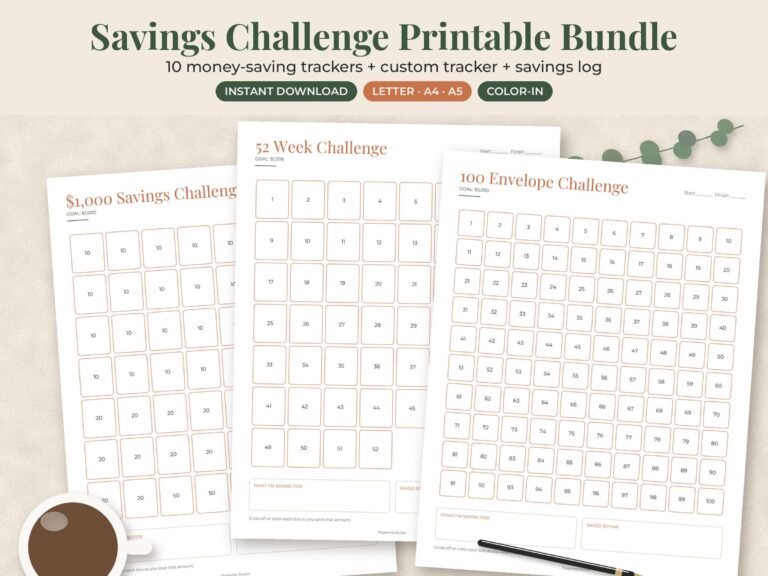
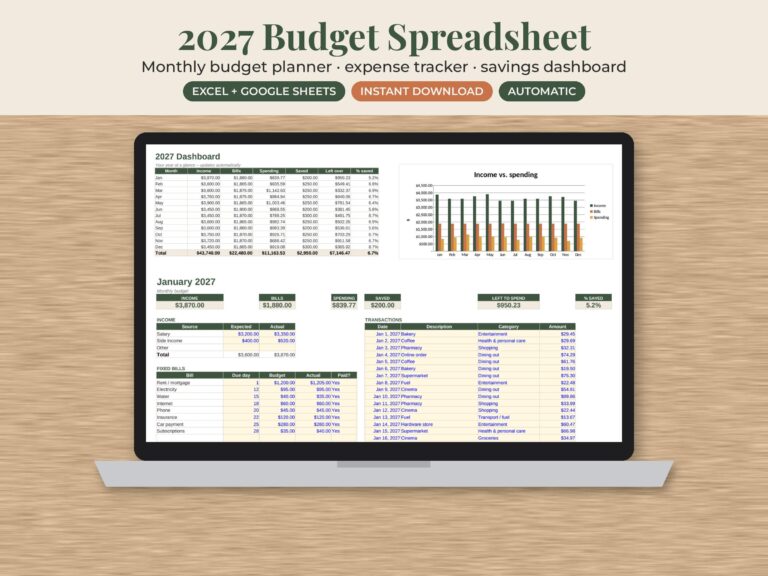
Our sinking funds savings tracker keeps each pot visible, and a savings challenge tracker bundle is a fun way to build the habit. To fit sinking funds into your full budget, try the 2027 monthly budget spreadsheet, or browse the budget templates and spreadsheets collection. If you’re also paying down balances, our debt payoff tracker guide shows how the two plans work together.